
|
Getting your Trinity Audio player ready...
|
Meet Leif Richardson and the Bumble Bee Atlas
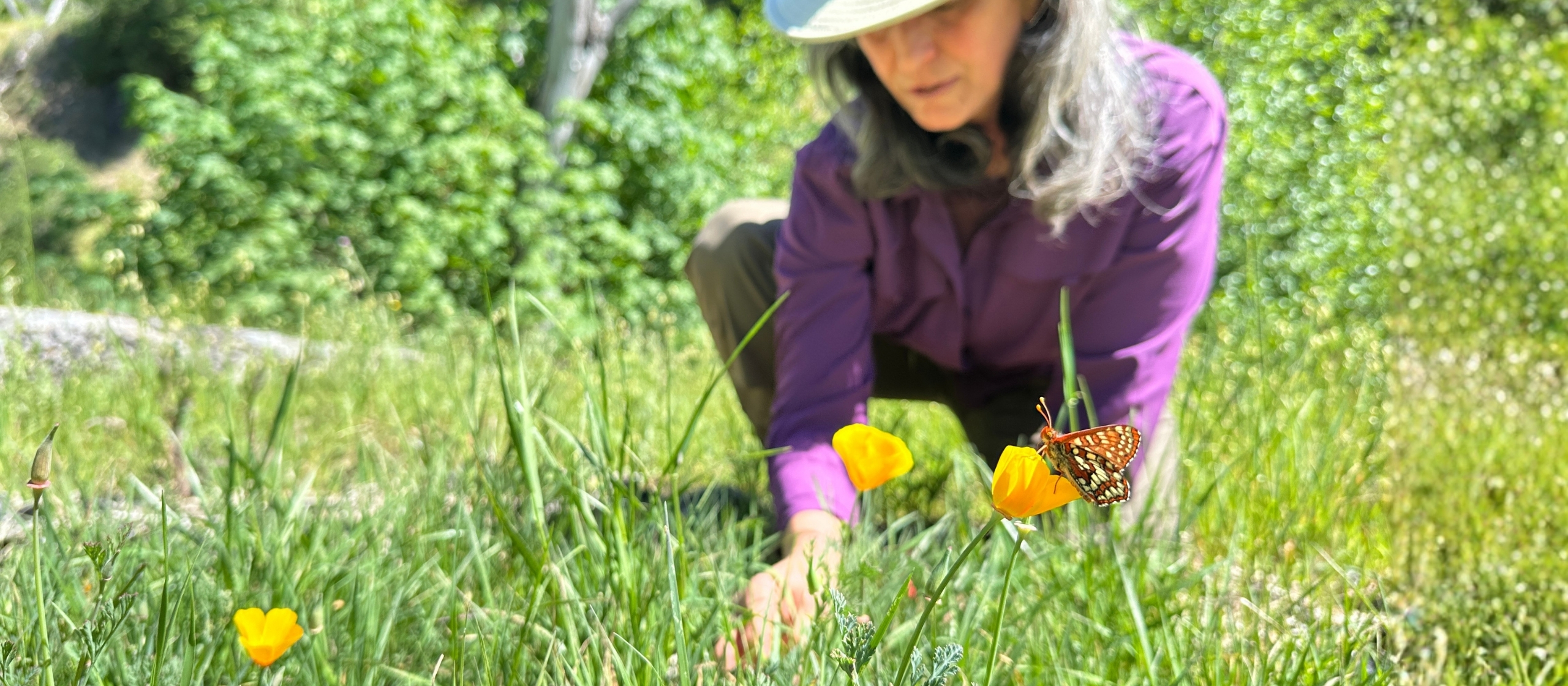
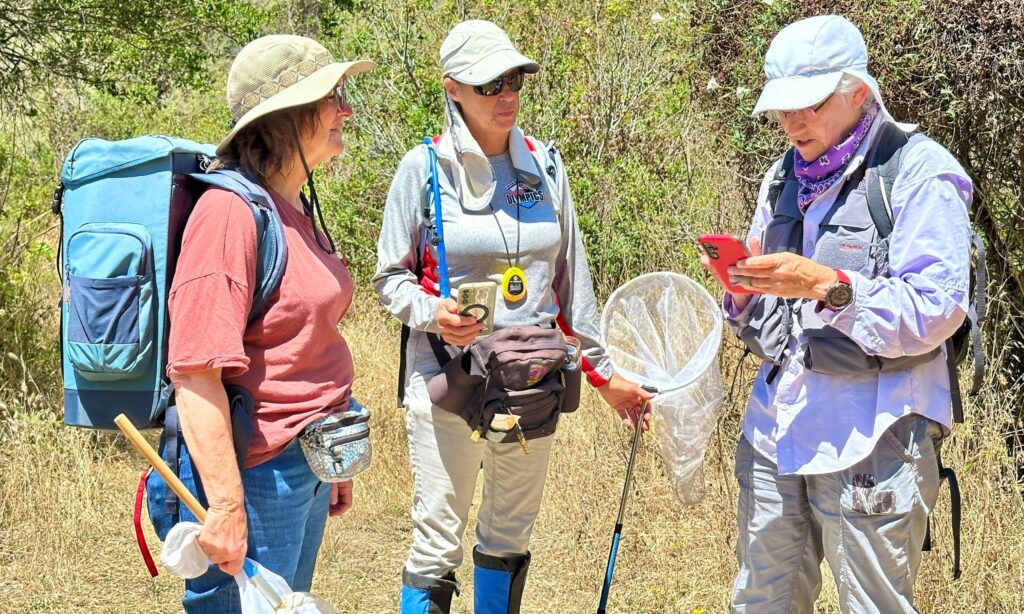
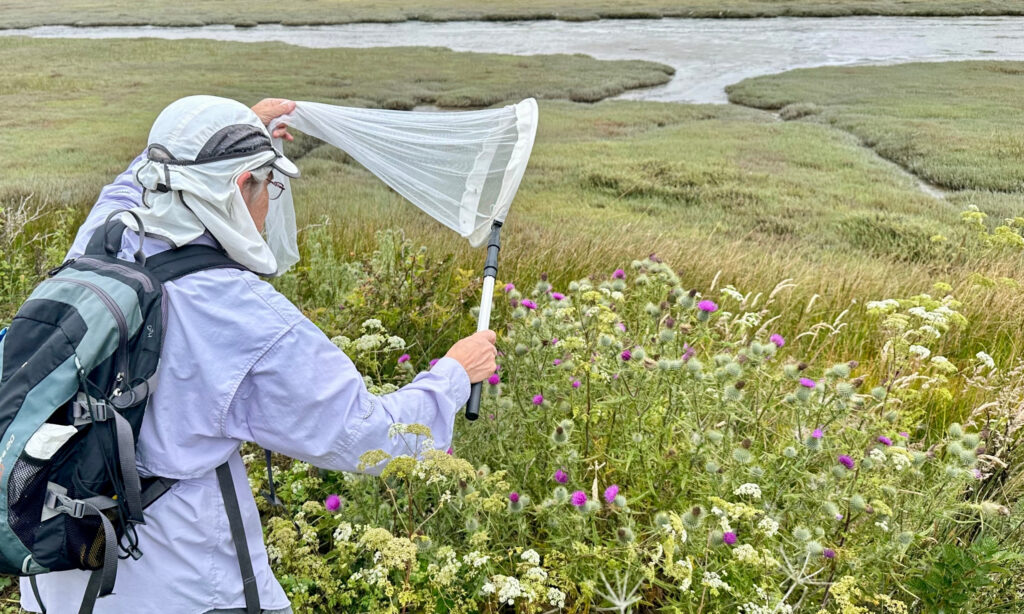
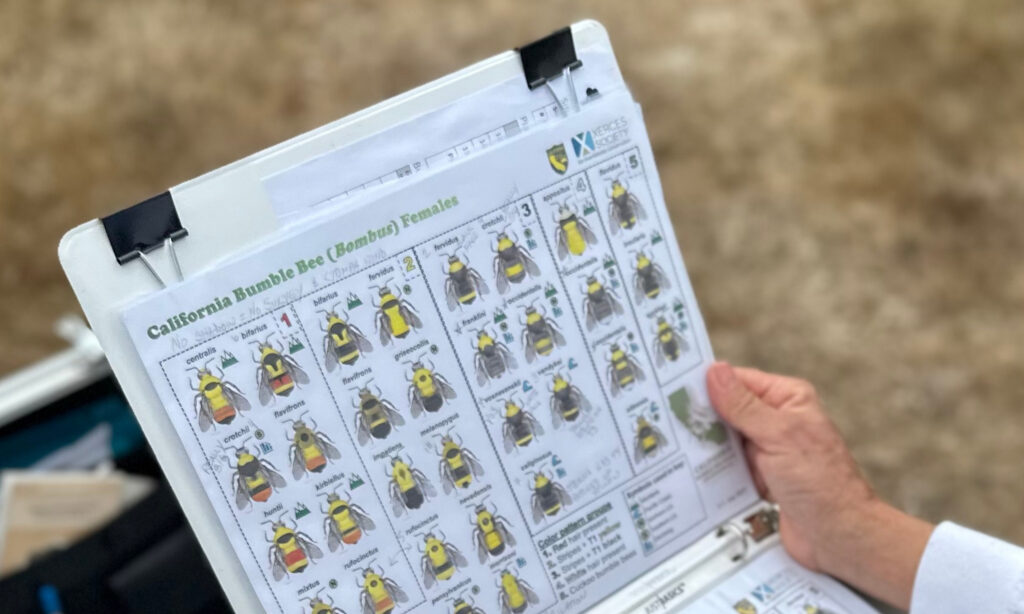
This summer, volunteers have been hitting the trails at our preserves with white insect nets aloft as part of a community science project called the California Bumble Bee Atlas, an initiative of The Xerces Society Invertebrate Conservation. Bumble bees are facing an uncertain future, and this long–term monitoring project, with nationwide implications, is gathering the data needed to track and conserve bumble bees.
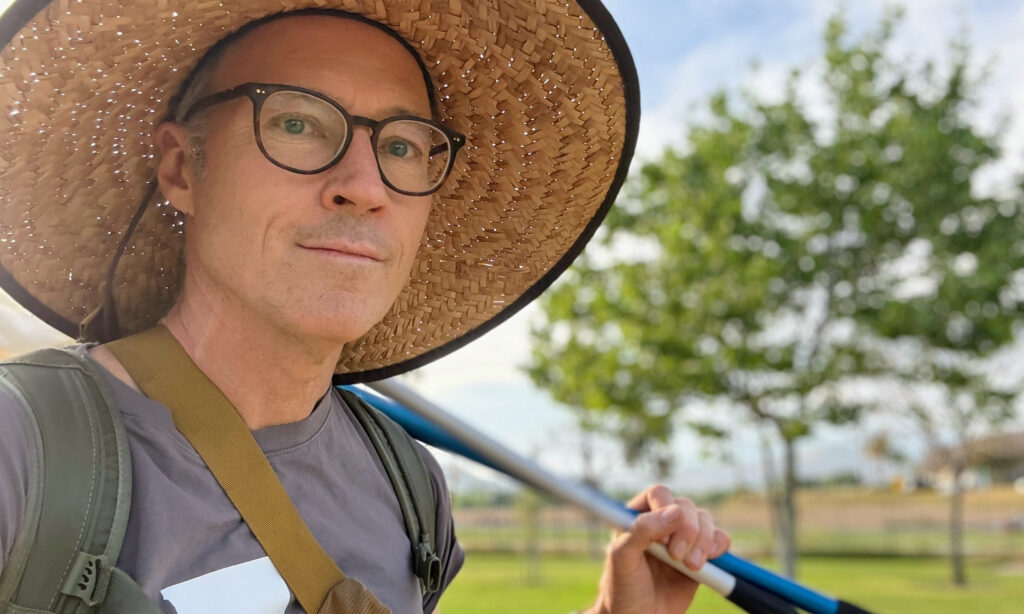
We connected with Leif Richardson, coordinator of the California Bumble Bee Atlas and an endangered species conservation biologist, to learn more about these fuzzy pollinators, the bumble bees they’ve found on All Hands Ecology lands, and how we can help bumble bees.
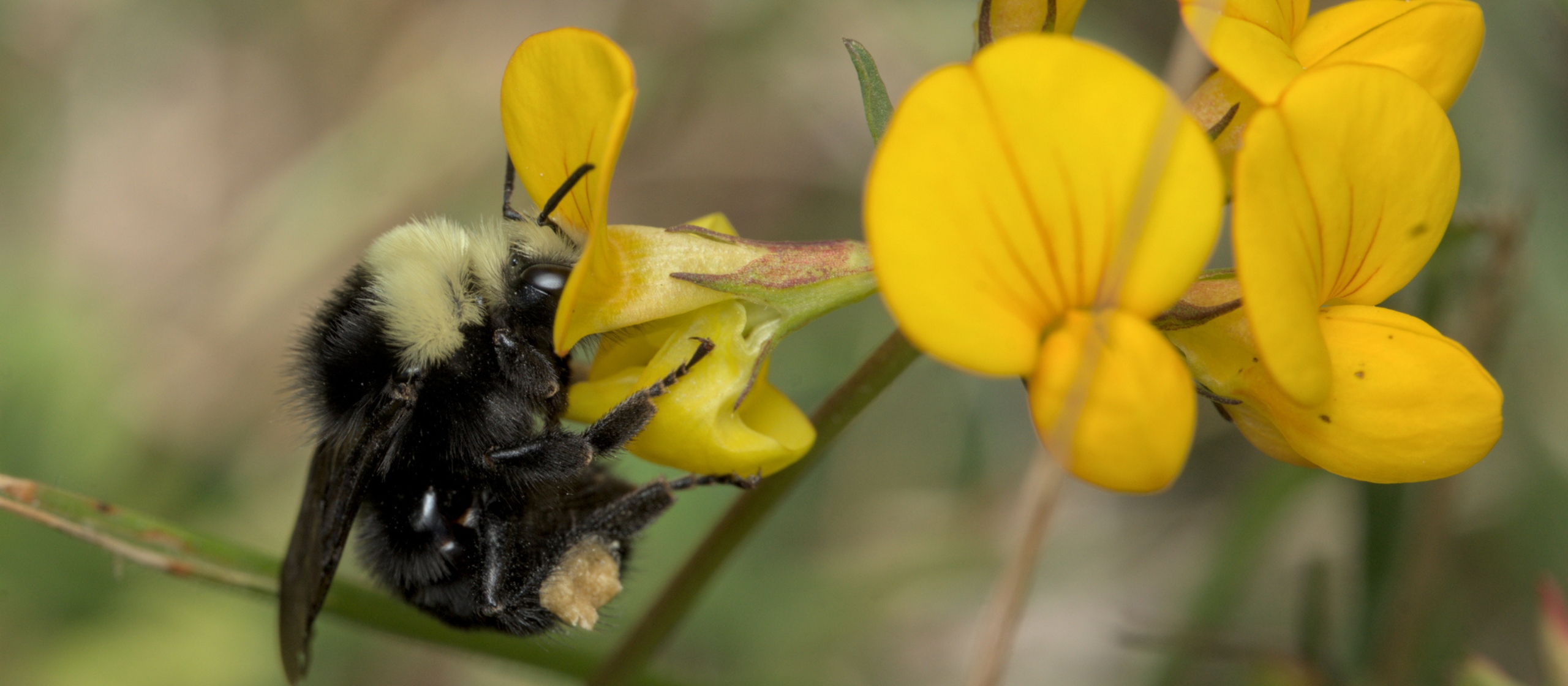
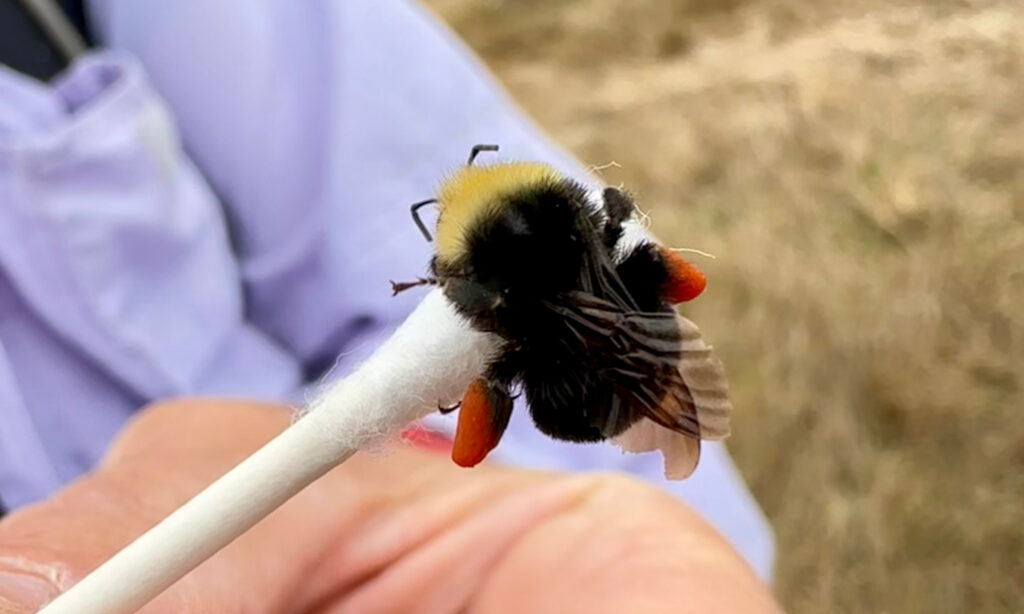
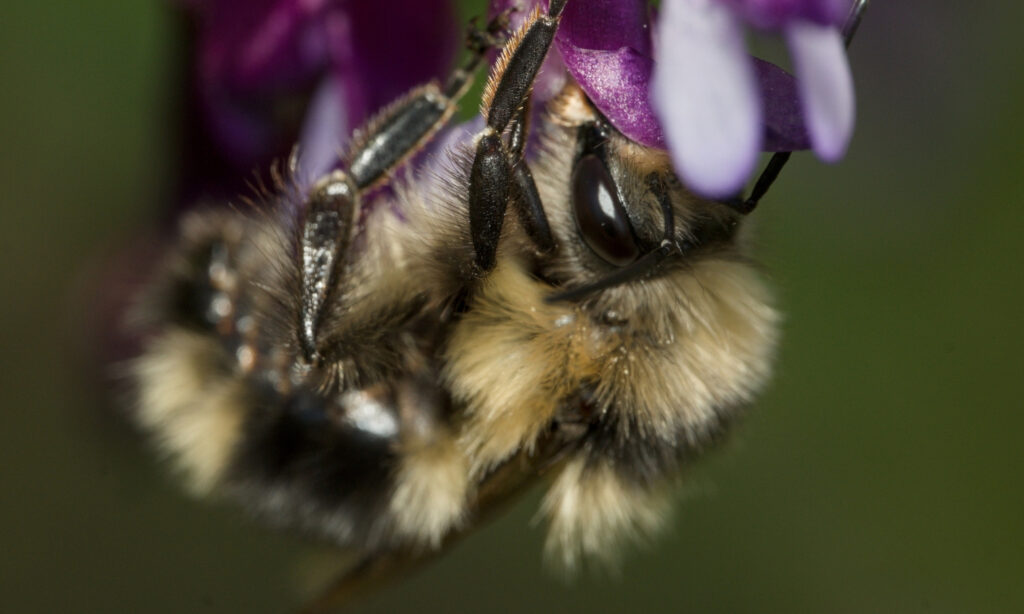
As the co-author of Bumble Bees of North America, Leif is especially charmed by the Morrison bumble bee and their endearing mating ritual. Males claim a patch of open ground, perfume it with pheromones, watch, and wait — keeping their exceptionally large eyes peeled for a potential mate.
What’s something that you think most Californians misunderstand about bumble bees?
Richardson: In general, the public doesn’t understand how diverse bees are. It turns out that there are many types of bees that are native here in California. We have something like 1,650 species of bees, 25 of which are bumble bees. I think that people misunderstand bumble bees as an alternate form of a honey bee. And in fact, there’s a number of different species of bumble bees with distinct life histories and interactions with plants and other organisms. They’re really kind of a special group of animals that we might have overlooked in the past.
What would you say is the biggest difference between honey bees and bumble bees?
Richardson: The single biggest difference is that honey bees are farm animals. They are livestock, just like chickens, pigs, and cows. Bumble bees are wild animals. So, you could imagine the analogy might be chickens versus condors or something. We’re talking about wild animals that are native, that have co-evolved with the plants that are native, and other organisms over many millennia. We brought honey bees here to make useful products like honey and wax. In addition to those things, the most important thing that we get from honey bees now is crop pollination.
What challenges are you most concerned about for bumble bees in California today?
Richardson: Really, the biggest threat is climate change, realized in California through drought and warming. We think that climate change is a really big deal for bumble bees, impacting where bumble bees can survive. Bumble bees are disappearing from the hottest places that they used to occur. There is another very worrying situation related to climate change — bumble bees and plants that they depend on are both coming out earlier in the season due to earlier springs, which can result in a mismatch of food availability and flower pollination. Other threats are habitat loss due to both development and land cover change, such as grasslands becoming more biologically impoverished by invasion by non-native plants. Pesticides are also a very serious issue. We even find them in protected areas, in reserves and wildlife areas at levels that kill some of these insects. Whether or not you’re applying them here right on top of the animals, it’s drifting.
What gives you hope for bumble bees in California?
Richardson: What I’m hopeful about is how many people in California want to help address these issues. People want to come out on a Saturday or drive 100 miles on a Sunday to do bee surveys for the California Bumble Bee Atlas. It’s really very hopeful to see that people care enough about these animals to join a community science conservation project, even though they are not entomologists or botanists. They’re regular people from a diverse set of backgrounds who care about this stuff. I feel hopeful about what we could do together if we chose to.
What makes the All Hands Ecology preserves valuable places to survey bumble bees?
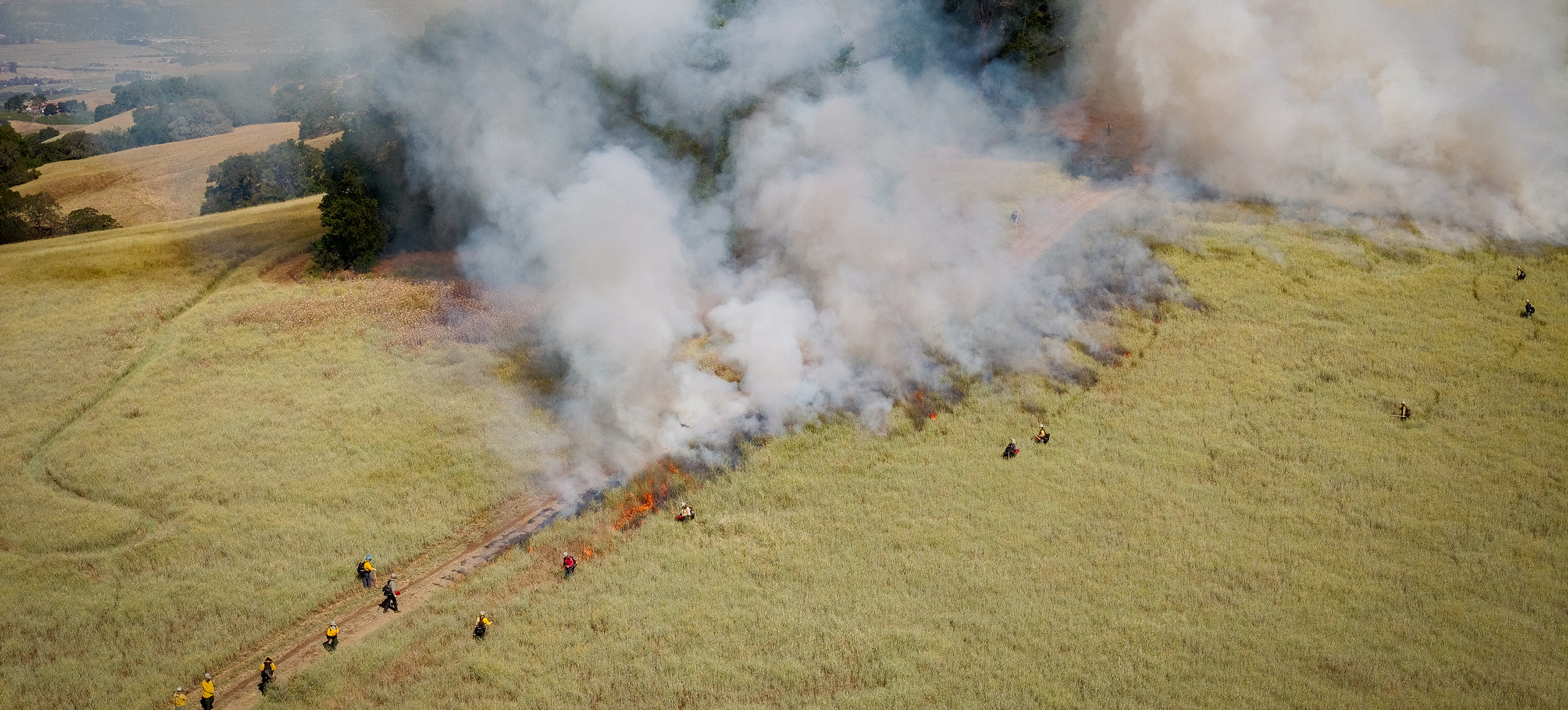
Richardson: The lands that you guys have are really important as ecological areas for bees. You’re managing for the vegetation that’s native there. You are using few or no insecticides, you are doing other things that benefit bumble bees and the things that they depend on. So, I think that’s great! At Modini, I saw a lot of wonderful plants and really good habitats. Another thing that I know your organization cares about is fire. Bumble bees and other bees really benefit from wildfire. Fire regenerates vegetation, increases soil nutrition, and changes plant community structure. We know from UC Davis’s work that bumble bees are larger bodied in fire scars than elsewhere, suggesting that they’re getting more nutrition. I think that that your focus on good fire — productive, ecologically sensible fire — is really important in general. I think we need more of that.
Are there any observations that have stood out from the bumble bee surveys on our preserves?
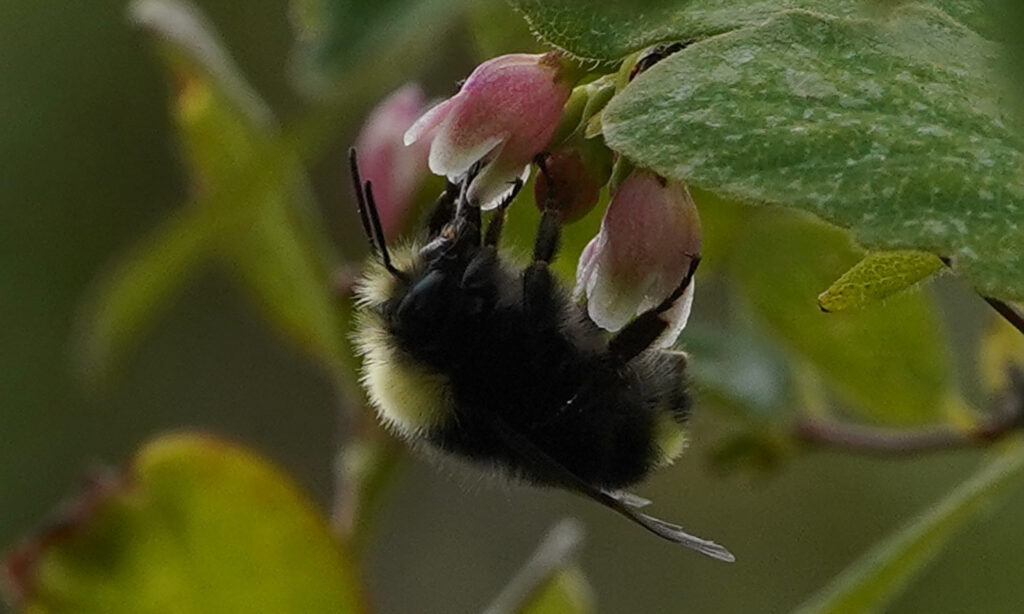
Richardson: We have found the common species of bumble bees at the preserves. Those are bees that belong there and should be there. This includes yellow-faced, black-tailed, and California bumble bees. At Toms Point, we found the fog-belt as well, an uncommon species and considered a Species of Greatest Conservation Need by the California Department of Fish and Wildlife.
If someone wants to help bumble bees, what’s one thing they can do?
Richardson: The simplest thing is to plant flowers. Bumble bees need flowers. Just a little bit of planting will make a measurable difference for the bees that live in your neighborhood. If there’s a bumble bee colony in the alleyway behind your street or on the hillside near where you live, you’re one of their grocery stores. Your tiny little front garden is worth it. If multiple people do that in a community, you get a kind of patchwork of habitat islands. There’s evidence that this is making a difference for bees. In particular, we want native plants in the ground — salvias, poppies, phacelia, lupines and so on. The Xerces Society has lots of resources on our website.
Links for becoming a bumble bee lover
- Bumble Bees of North America (Leif is a co-author)
- The ABCs of California’s Native Bees
- The Bees in Your Backyard: A Guide to North America’s Bees
- Common Bees of Western North America
- Common Bees in California Gardens
- California Bees and Blooms
- Bumble Bee Watch (for submission of bee observations — similar to iNaturalist)
- Bumble Bee Atlas (for CA Bumble Bee Atlas and other related projects)
- The Xerces Society for Invertebrate Conservation
Support stewardship for biodiversity
The lands we hold need thoughtful stewardship to address impacts of climate change and the decline of biodiversity. Your support helps us improve ecosystem resilience, giving landscapes and the species who depend on them an opportunity to thrive. Become a member or donate today.
Header photo: David Lumpkin