
|
Getting your Trinity Audio player ready...
|
An opportunity hiding in plain sight
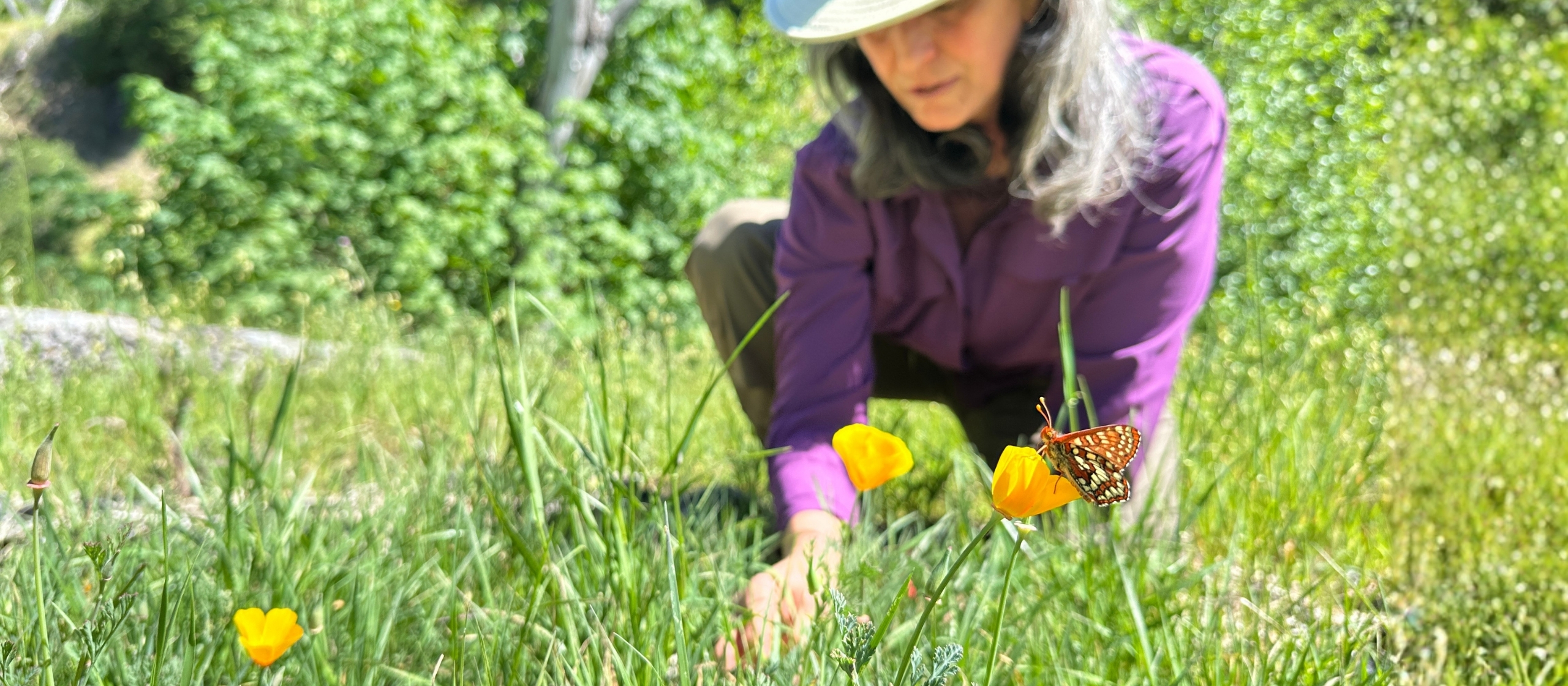
Michelle Cooper, resident biologist and preserve manager at Modini Preserve, has spent decades working to improve California’s grasslands. Only around one percent of the state’s healthy, intact grasslands remain. Most have been degraded, with nonnative species and vigorous shrubs and trees crowding out native wildflowers, grasses, and a diversity of plants — threatening the rich web of life these habitats support.
Cooper, who has made it her life’s work to address these losses, recognized an opportunity right under her nose at the Sonoma County preserve she manages. In a small circle of burned ground, left after a pile of brush and branches had turned to ash, she saw something rare in her work: a seedbed devoid of competition from weeds, ready to plant with native seeds.
“When I saw that torched burn pile and knew the seedbank had been wiped out,” Cooper said, “I thought, ‘This is what I’ve been waiting for!’”
What followed Cooper’s realization four years ago has been a watch-and-see trial, turning the regular stewardship practice of burning woody debris into a hopeful act of welcoming biodiversity. Once a burn pile has cooled, Cooper adds native seeds to germinate during the rainy season. We are building on Cooper’s trial with a pilot study across our preserves in Sonoma and Marin counties to see if this approach can be expanded throughout the North Bay Area.
Creating spaces for biodiversity
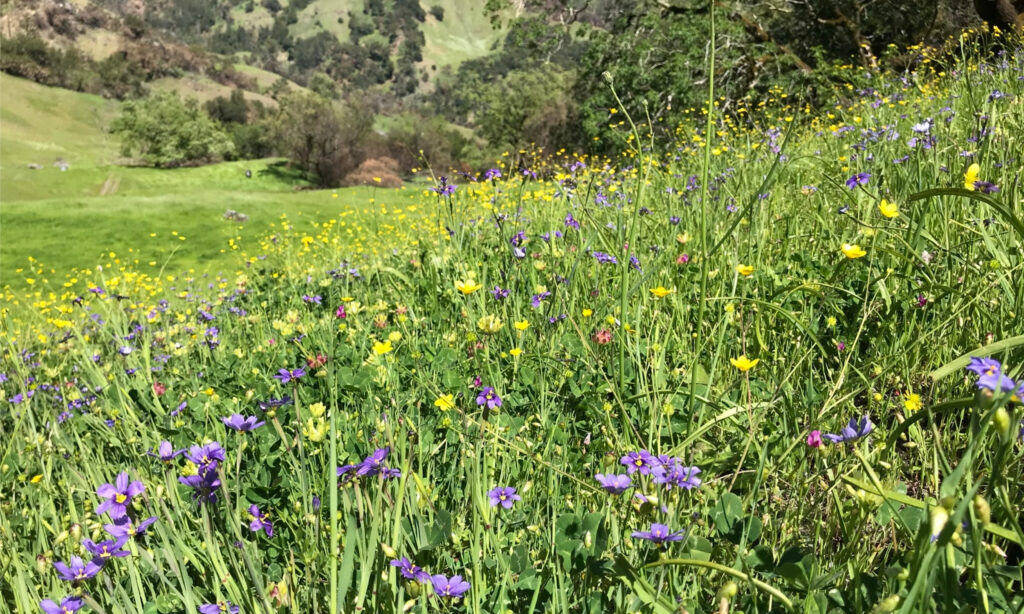
One of the primary threats to biodiversity in native grasslands is the establishment of invasive weeds, whose seeds can lie dormant in the soil for decades.
“Flushing the seed bank” can take years and rely on methods that are impractical, unattractive and/or slow,” Cooper explained.
Burn piles incinerate these seed banks in a matter of minutes through high intensity fire, making space where native seeds have a fighting chance.
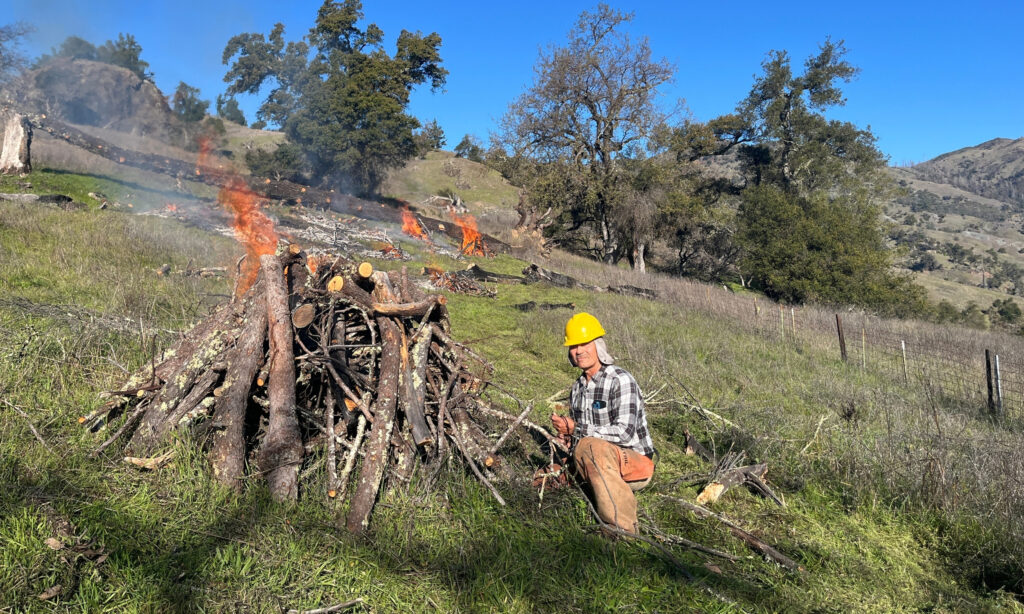
Brian Peterson, fire ecologist, describes a burn pile as “a concentrated disturbance.” The heat, he says, “will go down into the soil and can kill a lot of the fungus or microbes” as well as “the plants that are under there.”
Because of this potency, Cooper approaches burn piles with care, placing them in areas least likely to destroy established native plants. If native plants take a hit, the reseeding helps tip the balance back towards native species
Efficiency is the name of the game
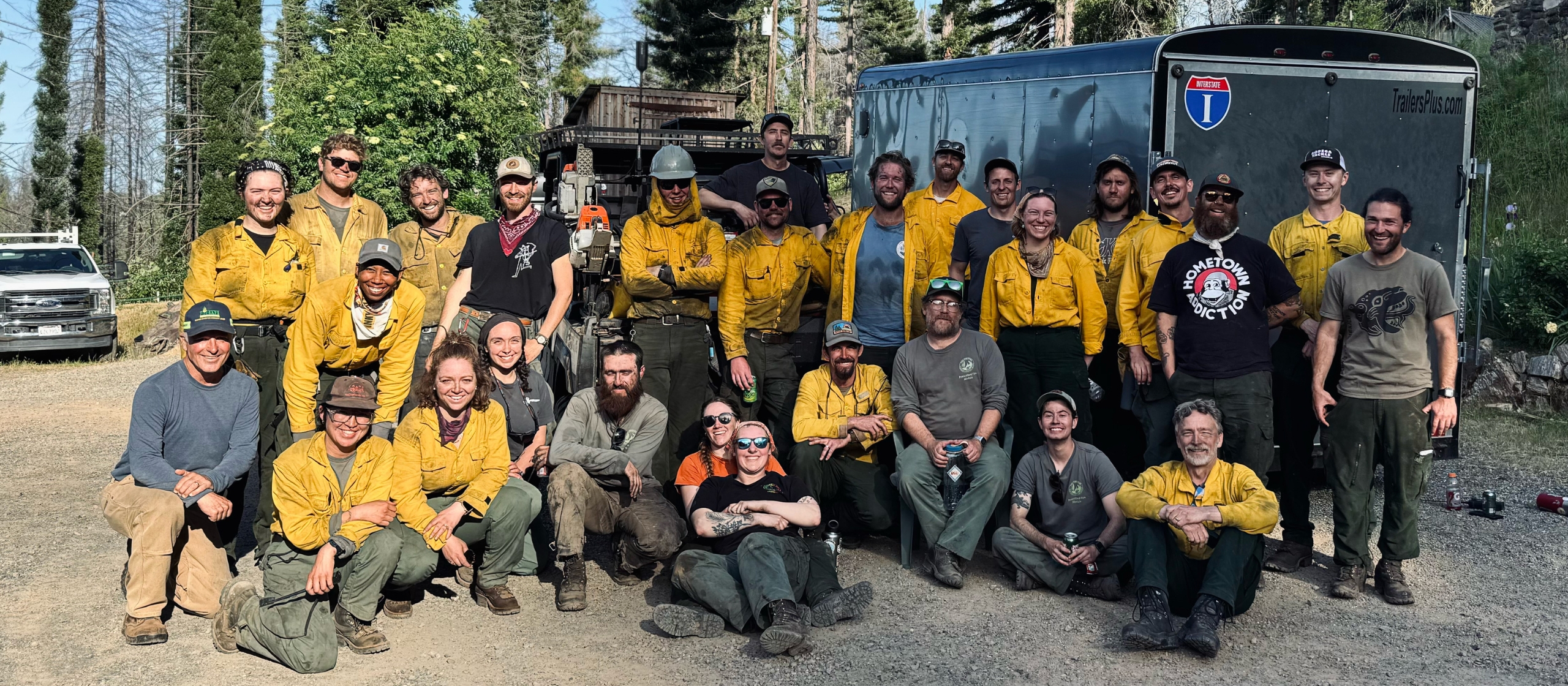
For Cooper, one of the biggest benefits of this approach is that it’s low maintenance. In one spot at Modini Preserve, the Fire Forward team has been working seasonally, building and burning piles of dead, low hanging branches left in the wake of the 2019 Kincade Fire.
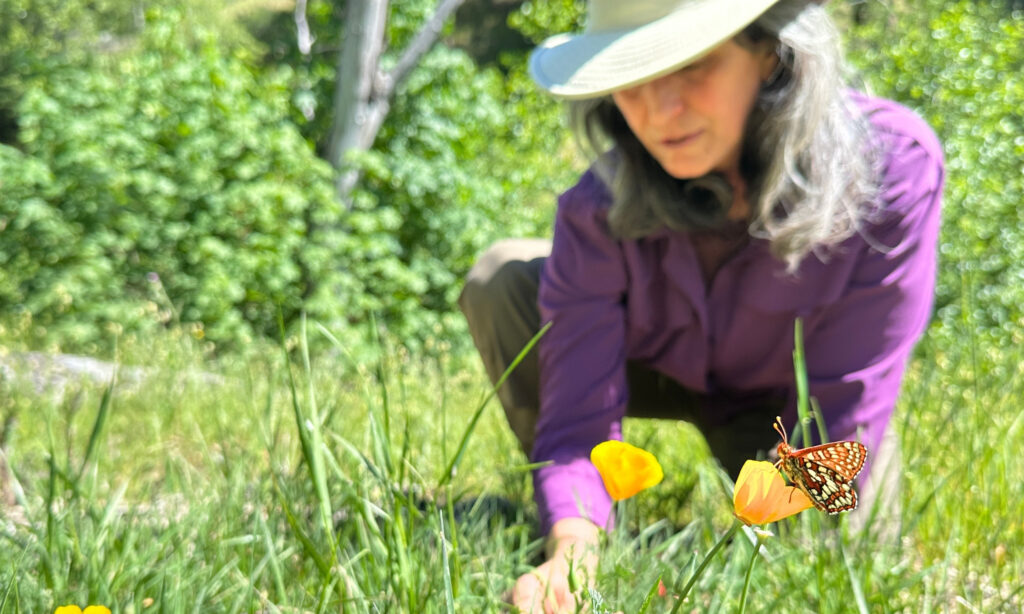
“We have planted the whole area, little bit by little bit,” said Cooper, noting the flourishing of the intended varieties of native seeds as well as an influx of other native species taking root.
“I haven’t been weeding, mowing, or doing anything … it’s not like you seed and then two years later, it’s all weeds again,” she continued.
With just three staff members stewarding the preserve’s 3,125 acres, seeding burn piles is a great way to capitalize on forest improvement work already taking place at the preserve.
“We were burning the piles anyway. Why not seed them with varieties collected from the preserve?” she explained.
A small step for biodiversity
Copper and Peterson see burn pile seeding as a practical way to take advantage of small openings in degraded grasslands. Each burn scar, though only five to 10 feet, can serve as a foothold for native plants.
“Anytime we break up the prevalence of non-native vegetation with a disturbance, we can use that opportunity to, hopefully, get native plants in,” he said.
Peterson sees this tool as especially helpful in places where burn piles are used strategically to clear encroaching trees and shrubs, as with the ongoing coastal prairie project at Martin Griffin Preserve.
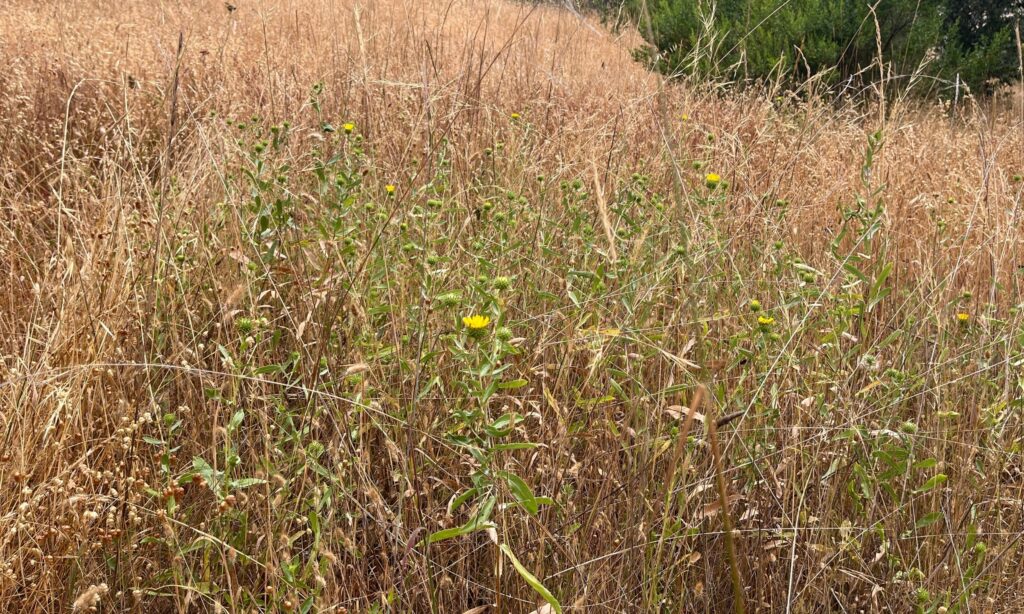
According to Cooper, in degraded grasslands there can be “tiny patches of natives right next to a bunch of weeds.” Because of this variability, thinking on a micro-scale can “actually make a difference.”
Creating a shared understanding
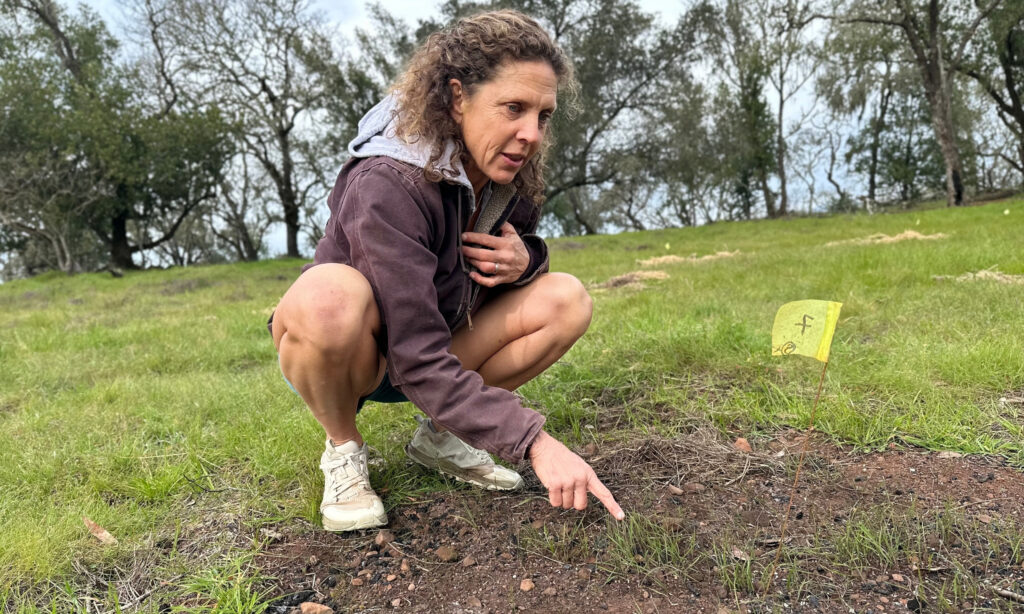
Last fall across our four preserves in Sonoma and Marin counties, we seeded 40 burn piles (10 per preserve) and left 20 burn piles (five per preserve) unseeded as controls. After the first growing season, the results are promising. Seeded piles had much more native plant cover than unseeded control piles, and much less non-native cover. One native grass we tested, Elymus glaucus, or blue wildrye, appeared to do well in nearly all of the piles, while other species had mixed results, helping us know which seeds are most likely to succeed and where additional testing might be needed. We’ll continue to monitor the piles for the next year or two.
Cooper, who proposed expanding her trial, believes it makes sense as a cross-preserve project. “Most of us at the preserves are burning piles anyway,” said Cooper. “Now we’re beginning to see if what works at Modini, can be applied to cool, foggy coastal conditions among thistles in West Marin or on the edges of oak woodlands in Sonoma Valley.”
One season of data is not enough to draw final conclusions. But since burn piles are already a widely used tool at all the preserves, this approach could offer a relatively low-effort way to turn some of those burned footprints into small islands for native plants. Those small patches could help make fuel-reduction work at the preserves do double duty, increasing forest resiliency while at the same time giving biodiversity a fighting chance.
Do it yourself
Do you want to use burn piles on your land? Download the most recent Burn Pile Guide for Sonoma County to learn about when to burn and how to safely do it.
To find locally sourced native seeds and plants, visit Sonoma Native Seeds and Calscape.
Curious about the ways All Hands Ecology uses burn piles? Read Five reasons we burn piles.