|
Getting your Trinity Audio player ready...
|
A landscape thirsty for fire
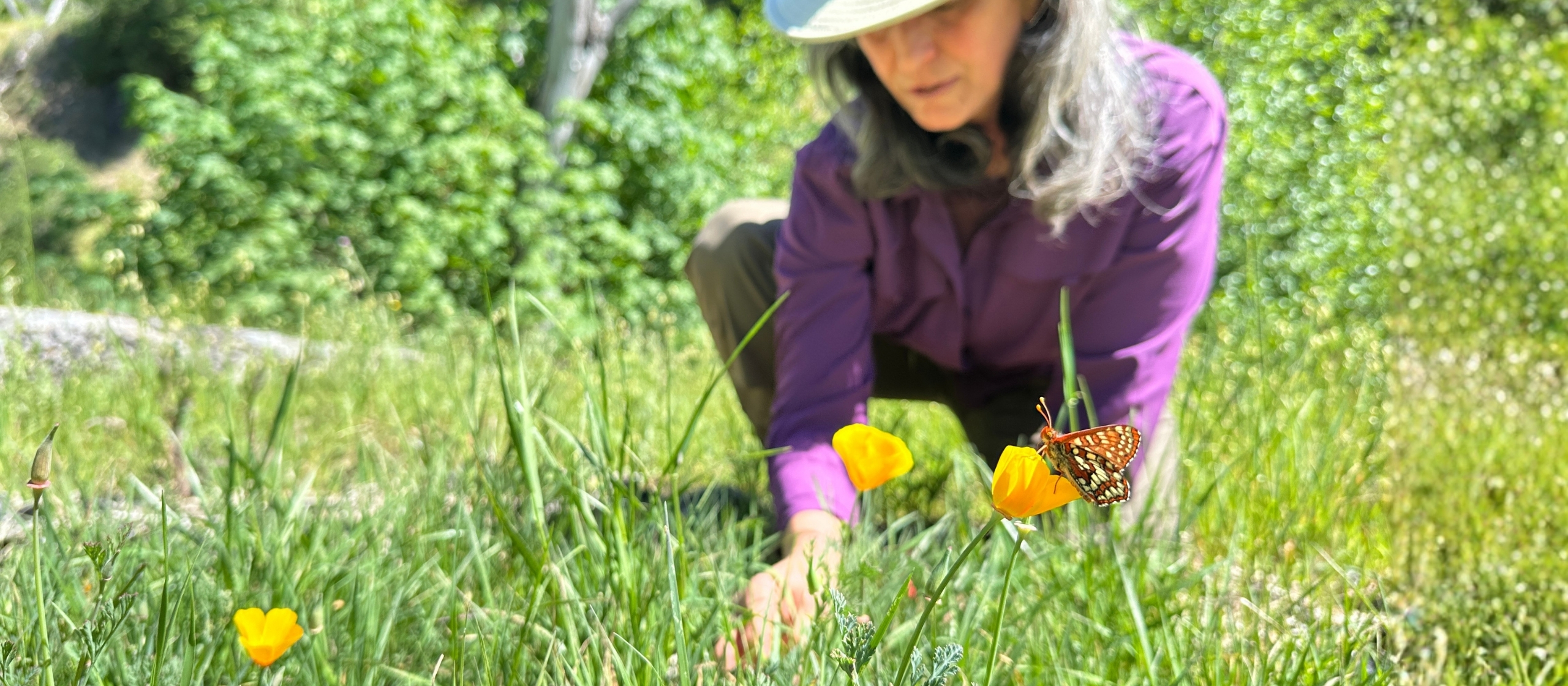
Sitting atop Sonoma Mountain is Triangle G Ranch, a 500-acre preserve managed by Sonoma Mountain Institute (SMI). The grasslands within these Coast Miwok and Southern Pomo ancestral lands have co-evolved with fire and grazing for millennia.
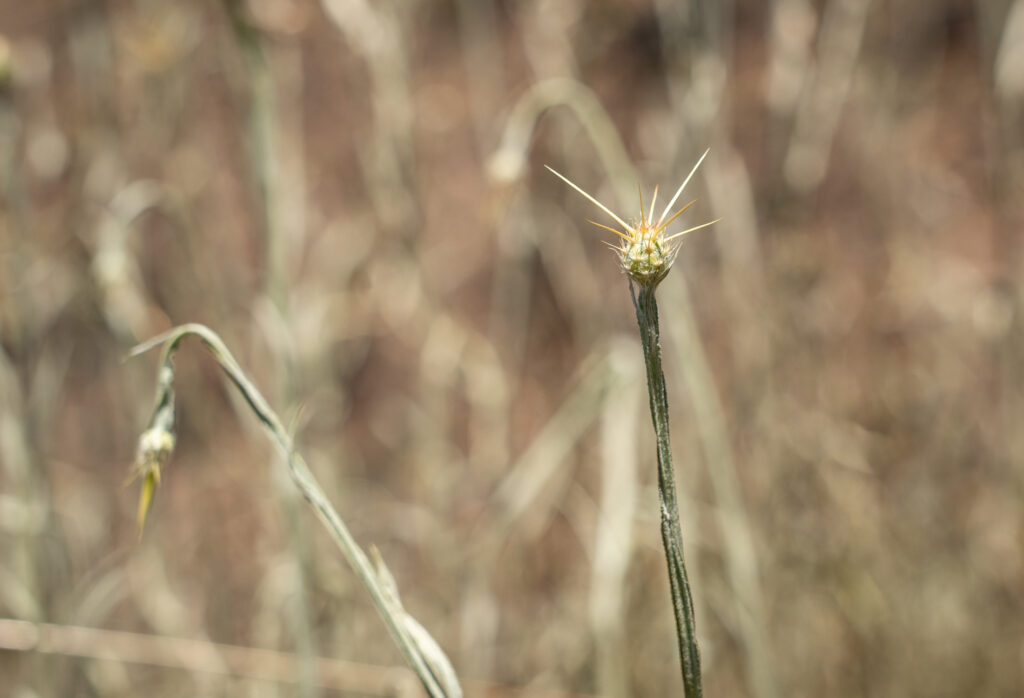
In more recent memory, the grasslands have become riddled with yellow starthistle (YST), a non-native plant that can aggressively dominate the range
“I watched it skyrocket from six inches to three-feet high,” said Aaron Gilliam from SMI’s grazing team. “A grazing and rest regime is not enough. Without fire, we’re lacking the tool for helping it stay in balance with all the other species.”
Only a brief window exists for fire to be used as an effective treatment on YST — roughly two weeks — before the seeds have ripened.
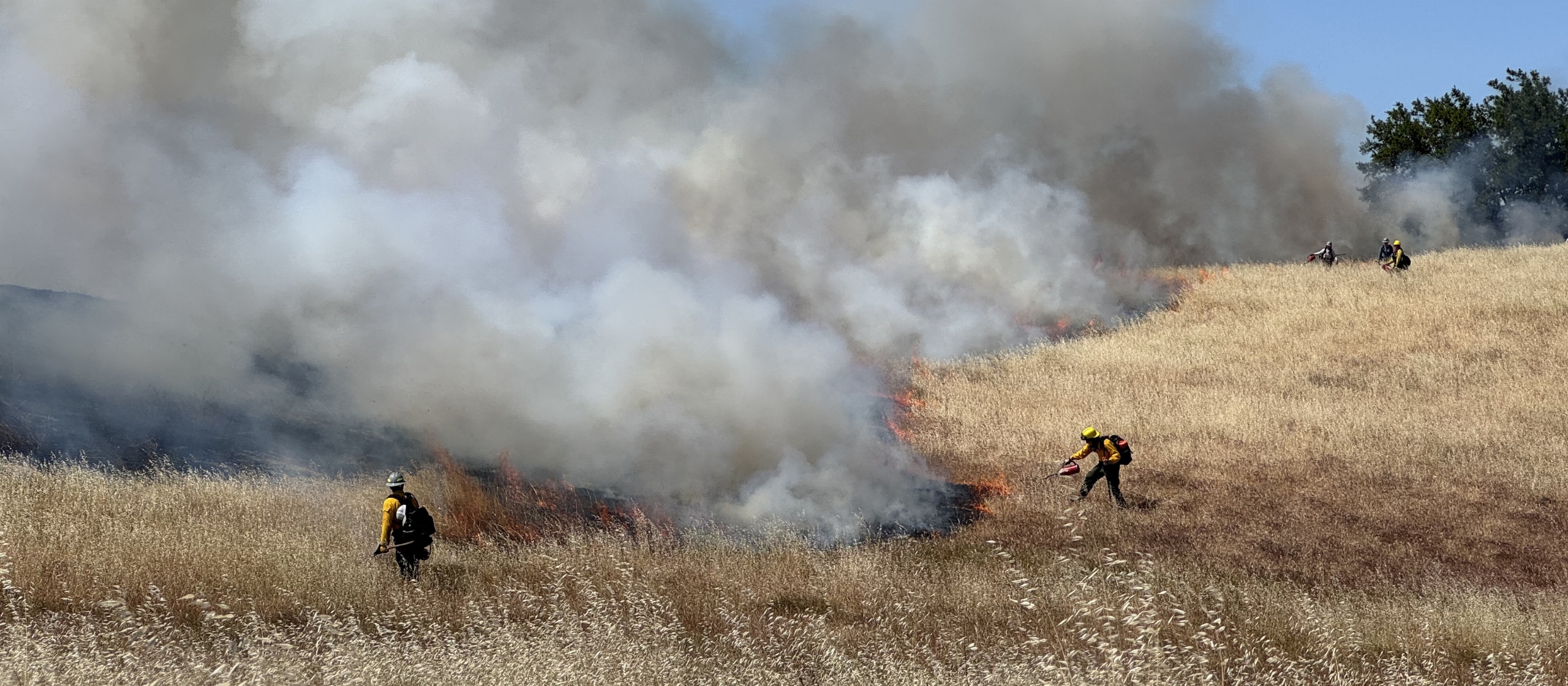
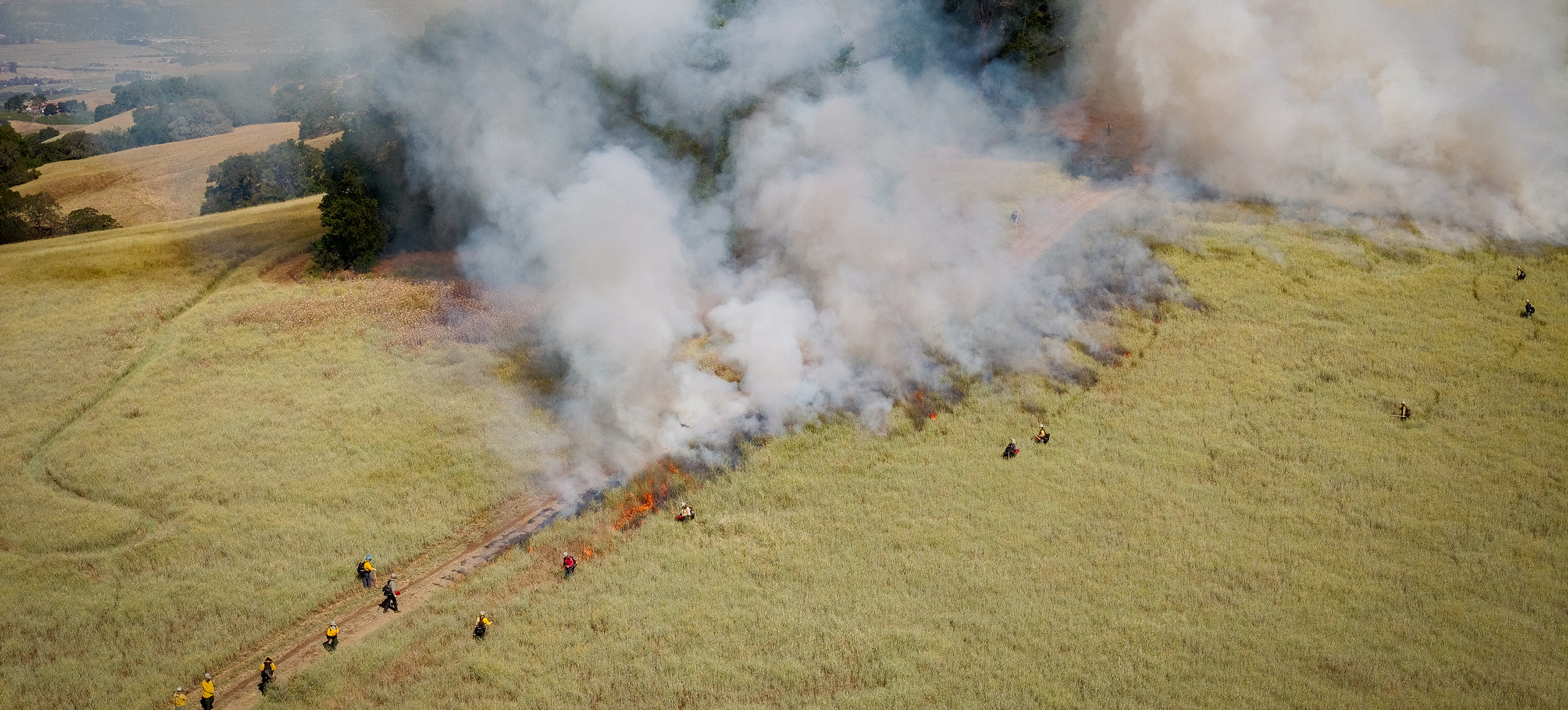
When that moment was identified at Triangle G this year, burn planners from our Fire Forward program spotted a favorable window in the forecast and permits were approved. Though it was nearly July, the local land, fire, meteorological, and air quality professionals agreed: the ecological and weather conditions were right for using beneficial fire to reduce the spread of this persistent plant.
Meeting the challenges of using prescribed fire to effectively steward local landscapes means continuing to adapt our thinking about the right time to burn. Restoring ecosystem health requires that we consider not only what we burn, but when we burn to get the best effects from good fire. To help us pinpoint these burn windows, we collaborate with experts from diverse scientific fields to guide us in knowing when it’s both advantageous and safe to burn.
Fire meteorologist hones burn timing
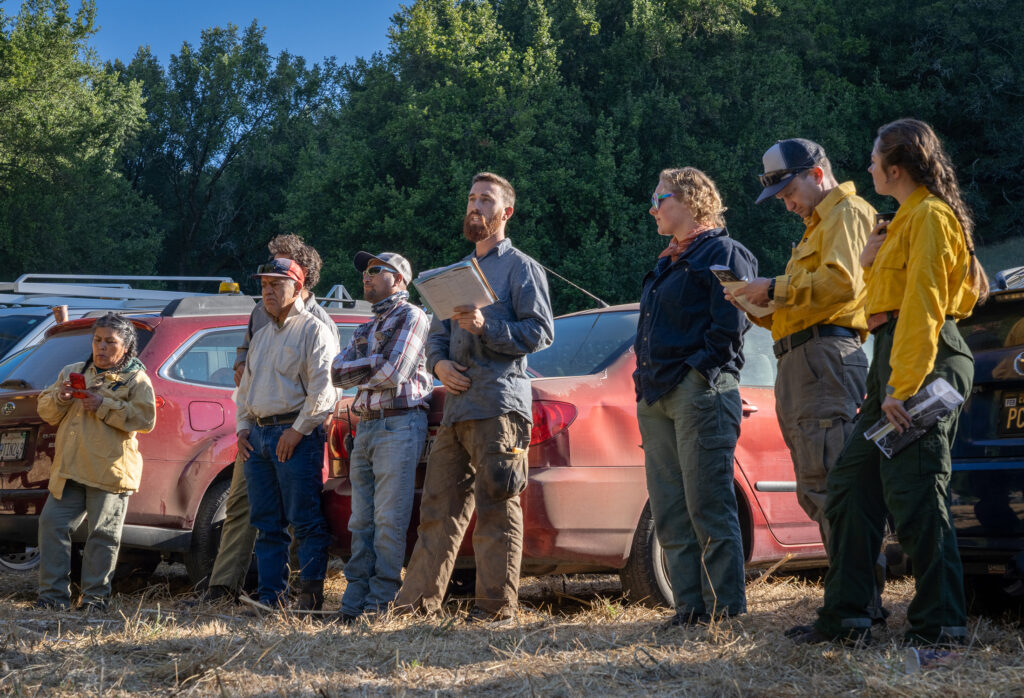
On the eve before the Triangle G burn, the Fire Forward team called on Ben Hatchett, an expert in the field of fire meteorology to discuss a detailed forecast.
Hatchett understands weather. As a professional fire meteorologist with a doctorate in climate dynamics and paleohydrology, he now specializes in the effects of weather on wildfires. A well-known resource to the local fire community, he has volunteered his professional skills as a contributing scientist for the last five years. Hatchett is called on throughout the year to consult on the timing of burns when we need extra weather insights.
Having access to this expertise matters for advancing our work. As climate and human land use continue to change ecosystems, we need continually evolving information from the people who are working on the front lines of these changes every day.
Burn windows open opportunities
Deciding on the right time to burn means not only taking into account factors like the unique ecology of vegetation communities, the biology of individual species, and the desired outcomes, but also working with experts like Hatchett to understand the pockets of opportunity during the seasons.
A recent burn windows study, co-authored by Hatchett, looks at the use of beneficial fire within the seasonal variability of the San Francisco Bay Area.
“We can have a really wet start to winter that then gets really dry in the middle, or an early end to winter and 90-degree heat waves in March,” he explained. “Those all open up windows of time where things dry out and there’s potential for fire.”
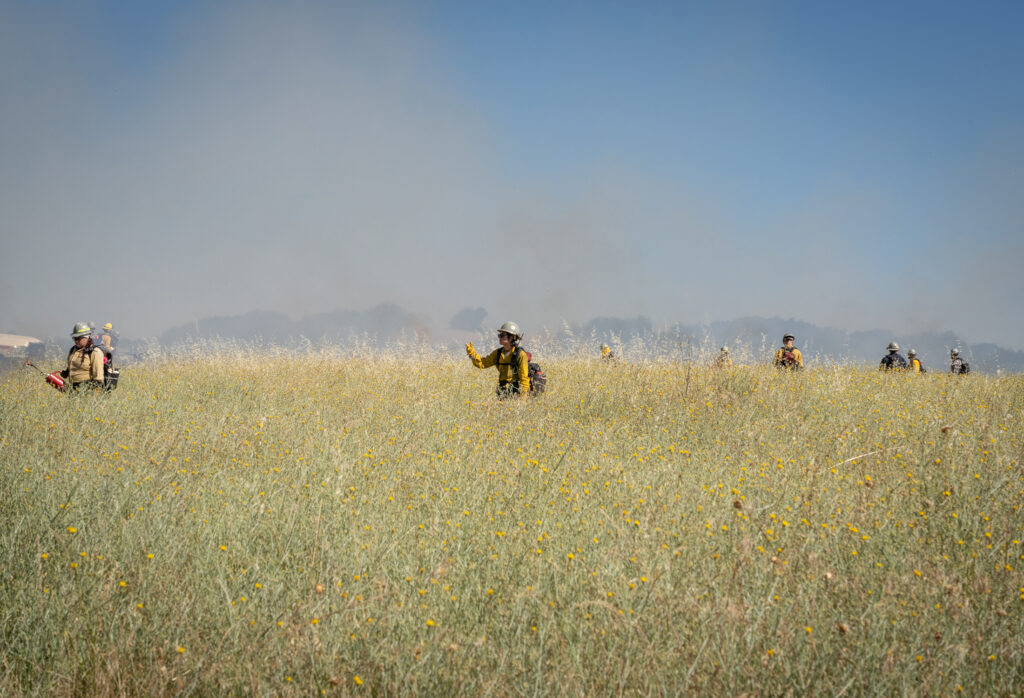
With grassland burns, like the operation planned at Triangle G, a few hours with the right temperature, wind, and humidity provided the opportunity to burn safely and effectively.
“A lot of work can be done in a few hours that couldn’t if you take a daily perspective, let alone a whole season,” Hatchett continued. “If the morning or evening is good, that’s really all you need.”
Shifting from seasons to windows
“Breaking things into seasons is something we innately do in Western culture. We ascribe a season for wildfire and a season for burns,” said Hatchett. “Believing there’s a time of the year for fire is a social construct. It’s sensitive when it’s tied to the trauma of fire anniversaries.”
Hatchett’s observations and analysis of seasonal variability extends beyond the Bay Area as well.
“A variety of factors will help us meet the statewide mandate of burning 100,000 acres annually,” remarked Julia Berkey, All Hands Ecology’s director of prescribed fire. “One factor is extending burning into times of year not typically associated with prescribed fire — whether that’s the winter or the summer — if we want to reach these targets.”
Fire returns to Sonoma Mountain
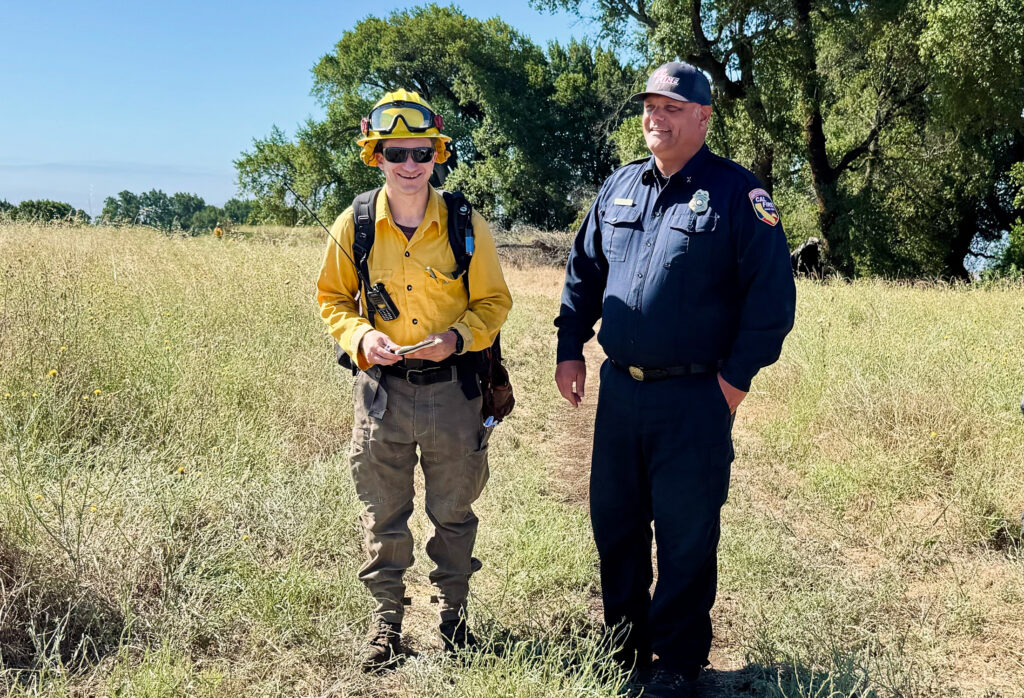
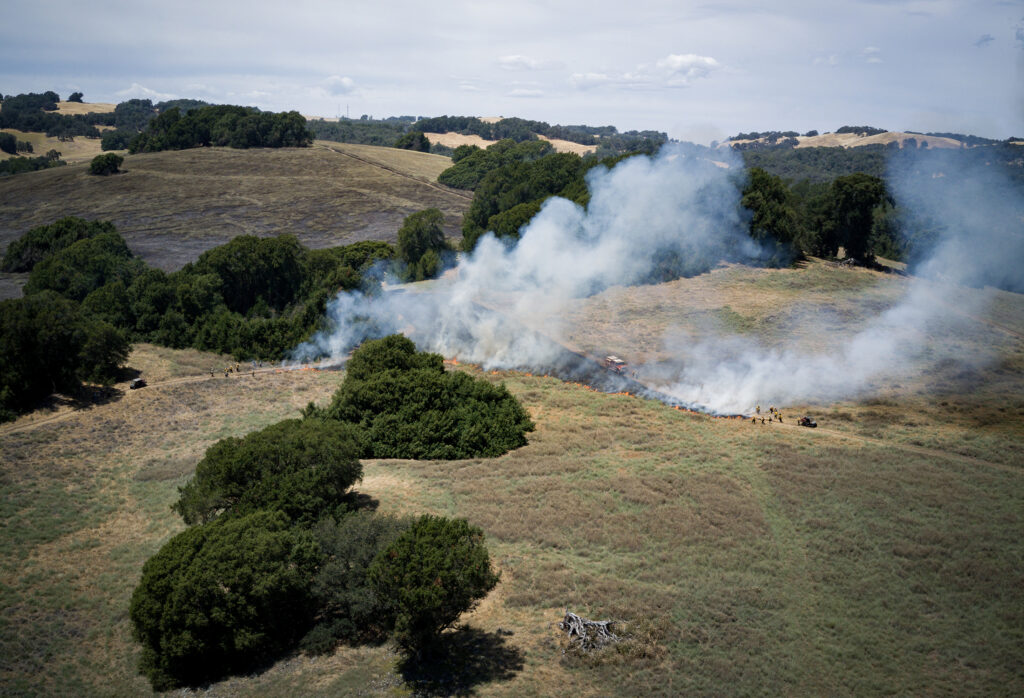
Hatchett’s input was also instrumental during the Triangle G burn. He led the Fire Effects and Monitoring (FEMO) team, reporting on-the-ground weather readings every hour and whether the fire was meeting objectives.
“Gluing myself to Ben Hatchett’s side and observing all that goes into FEMO was eye opening,” said Gilliam about the degree of information and real-time adaptations during the burn. “I’d call it a well-oiled machine, but there’s something far more organic and intelligent than any machine equivalent.”
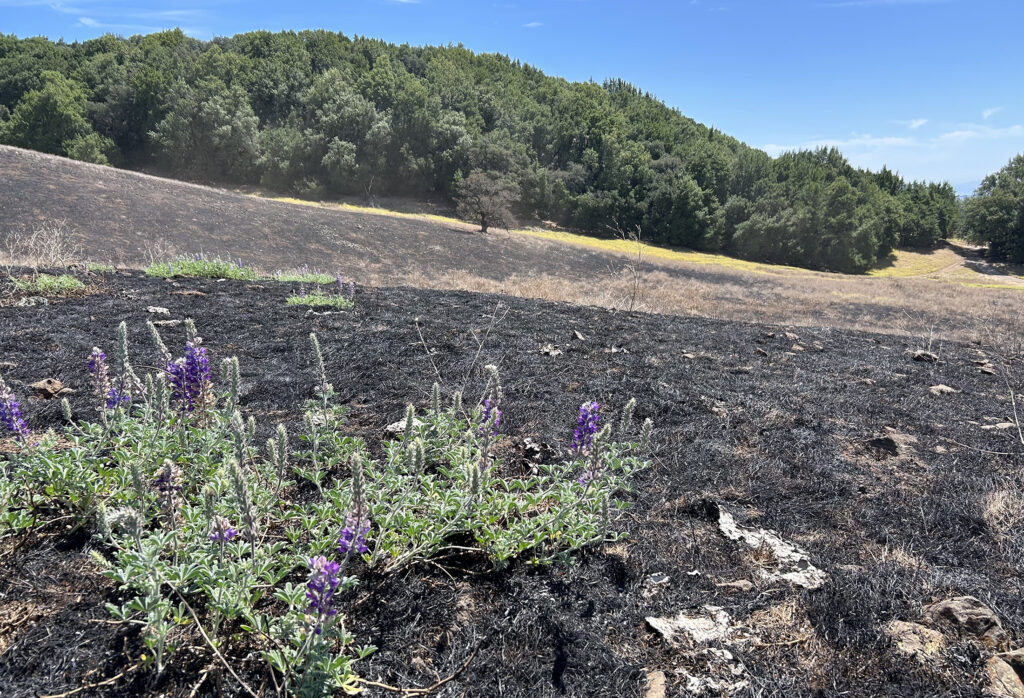
Following the burn, 95 percent of the YST in the unit had withered to a crisp brown, the aspiring seedheads nipped in the bud by fire. The 82-acre burn built on a previous 62-acre burn as part of a multi-year plan to refine the use of fire, grazing, and rest to increase the health and biodiversity on Sonoma Mountain.
“There’s so much expertise in our community,” reflected Berkey. “Working with contributing scientists like Ben helps us move the field of prescribed fire forward.”
Join local efforts to use good fire
Are you part of a Firewise community? Share this blog with them.
Stewarding local landscapes such as Sonoma Mountain needs your support. Join us!
Photos by Andrea Dunlap unless credited otherwise.