
|
Getting your Trinity Audio player ready...
|
Fire as a sculptor of biodiversity
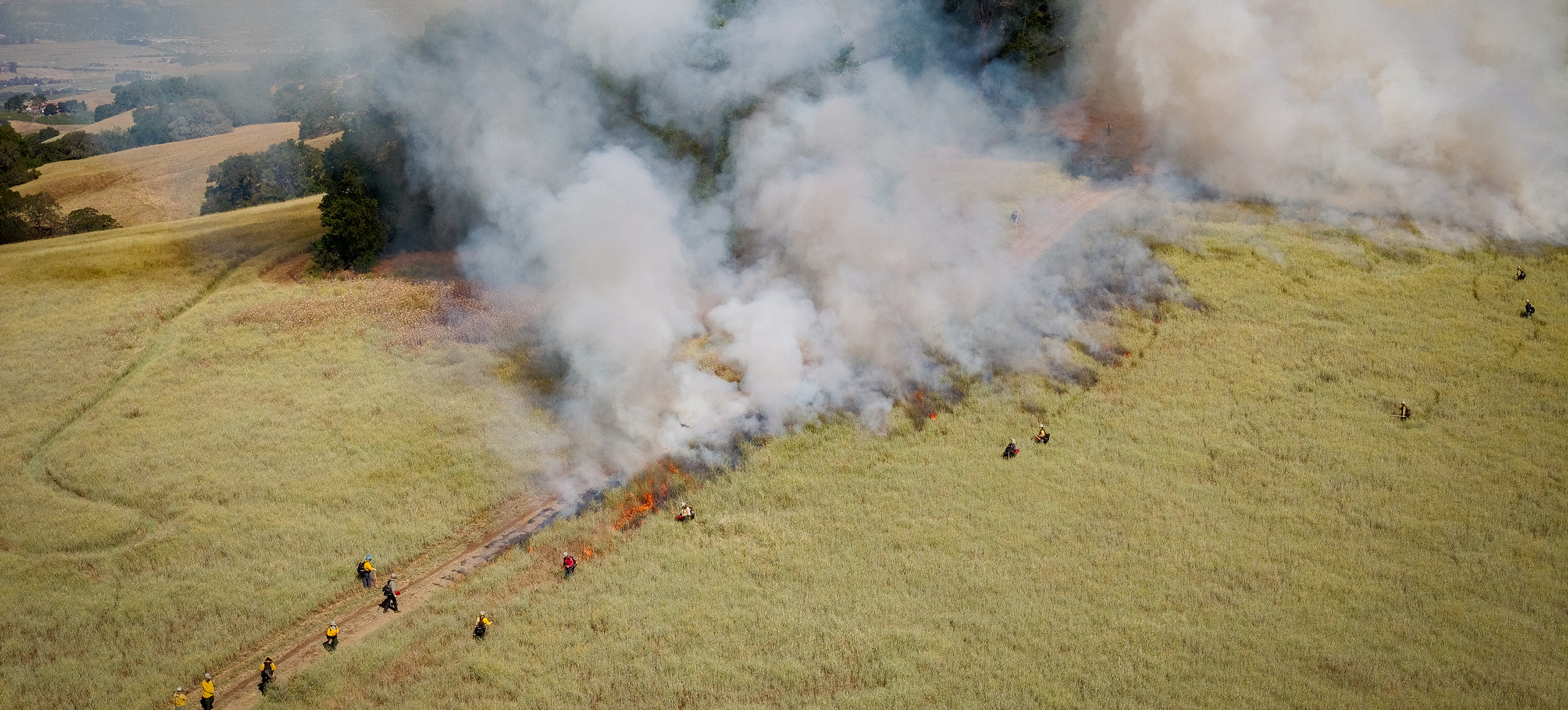
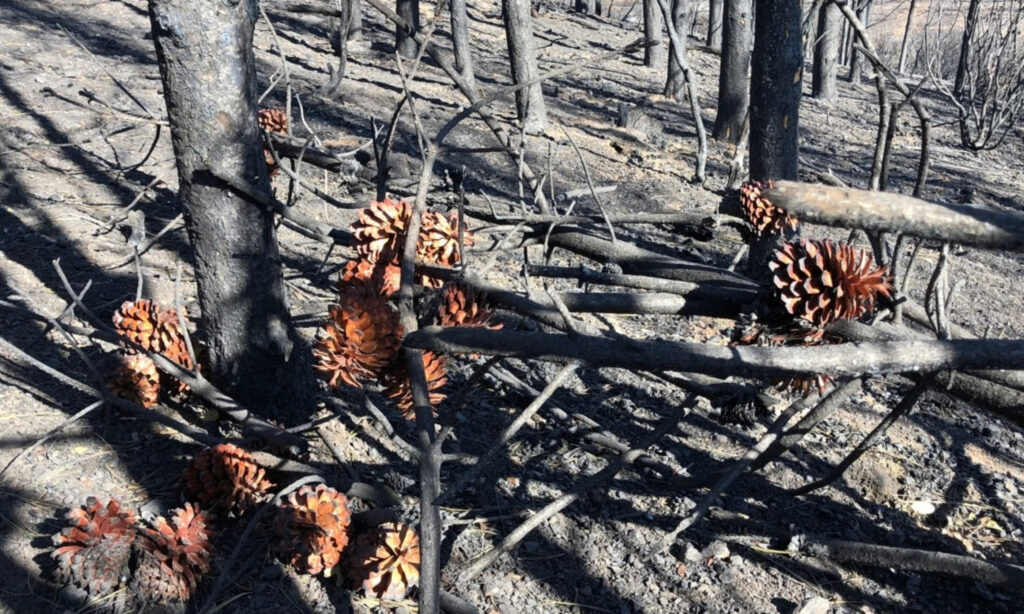
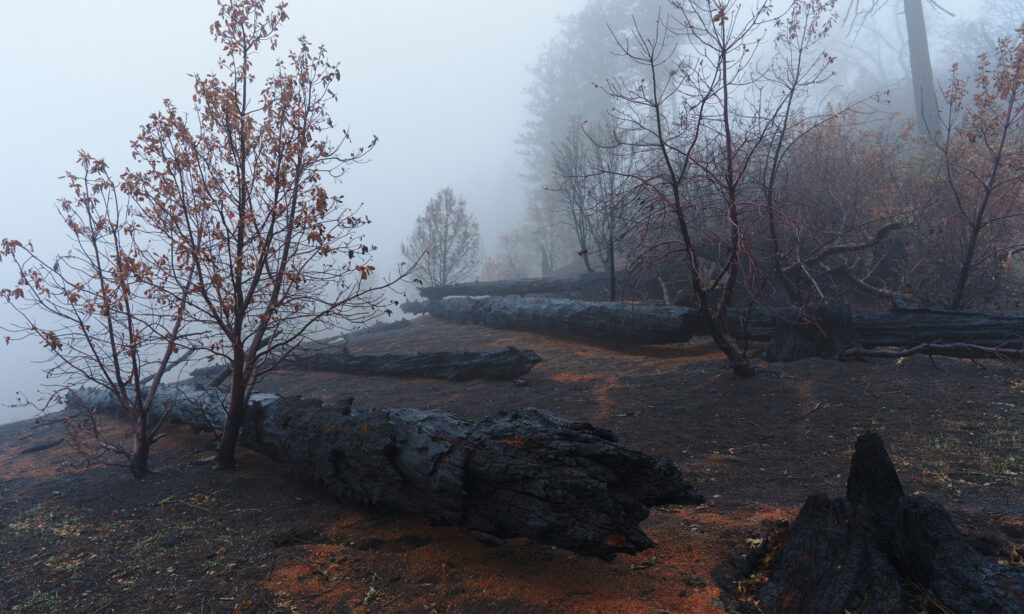
It’s no secret that fire plays a major role in shaping habitats in Northern California. The various strategies plant communities use to cope with fire are a major contributor to the incredible diversity of the region. Redwoods wear burn scars the height of multi-story buildings yet persist for centuries to millennia. On an adjacent ridgetop, there might be hundreds of whispering bells enduring for decades only as seeds, waiting in the soil for a fire to come through.
Naturally, animals also have relationships with fire-shaped habitats, as with black-backed woodpeckers, which rely on the stands of conifer snags created in high-intensity fires for the flush of bark beetles and wood borers that follow. Though these relationships have been a topic of study for decades, the complexities of different fire behaviors, fire’s interaction with habitat types, and the variety of habitats a species might occupy mean the ways animals will respond to fires aren’t always predictable.
An opportunity presents itself
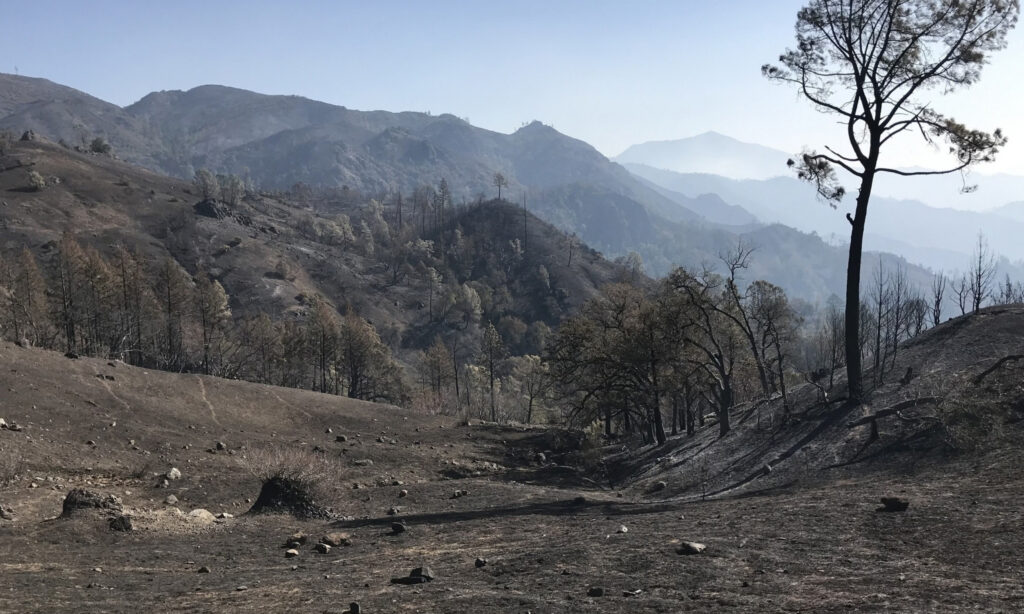
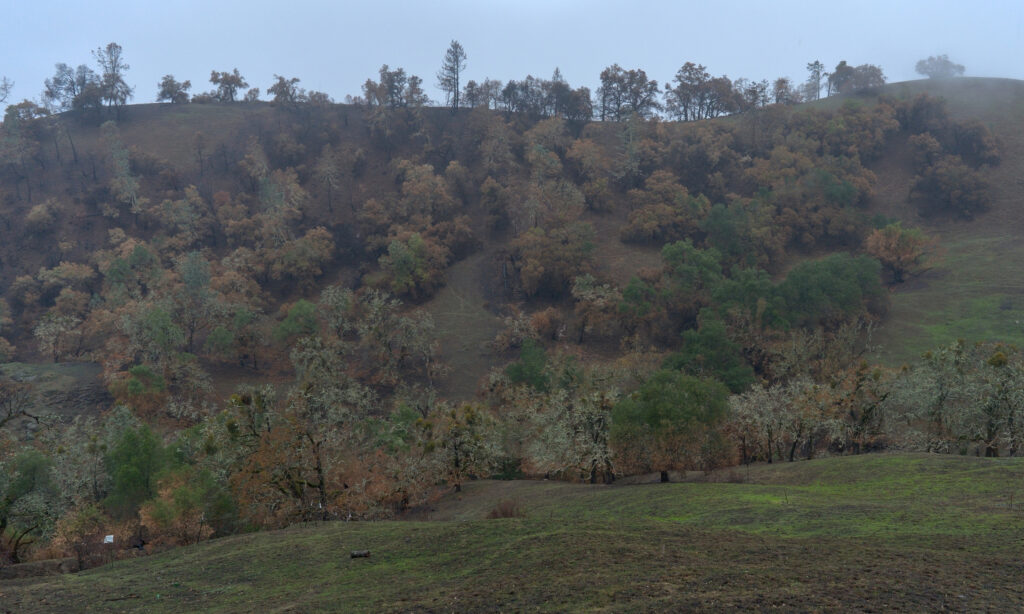
We had an opportunity to learn more about how local birds responded to a wildfire through long-term point count data collected from 2013 to 2018 along Pine Flat Road, adjacent to Modini Preserve near Healdsburg. The 2019 Kincade Fire burned along the entire mountainous portion of this road. As a well-known birding spot, Pine Flat Road is especially compelling in the spring, offering better chances of finding high-elevation or chaparral-associated birds than most of the rest of the county. Many birders post their findings to eBird, allowing researchers access to a volume of information. We examined bird species’ abundance using three years of data before and after the Kincade Fire using our data along with the eBird observations from the same time period. Our findings have recently been published by Western Birds.
Patterns in the findings
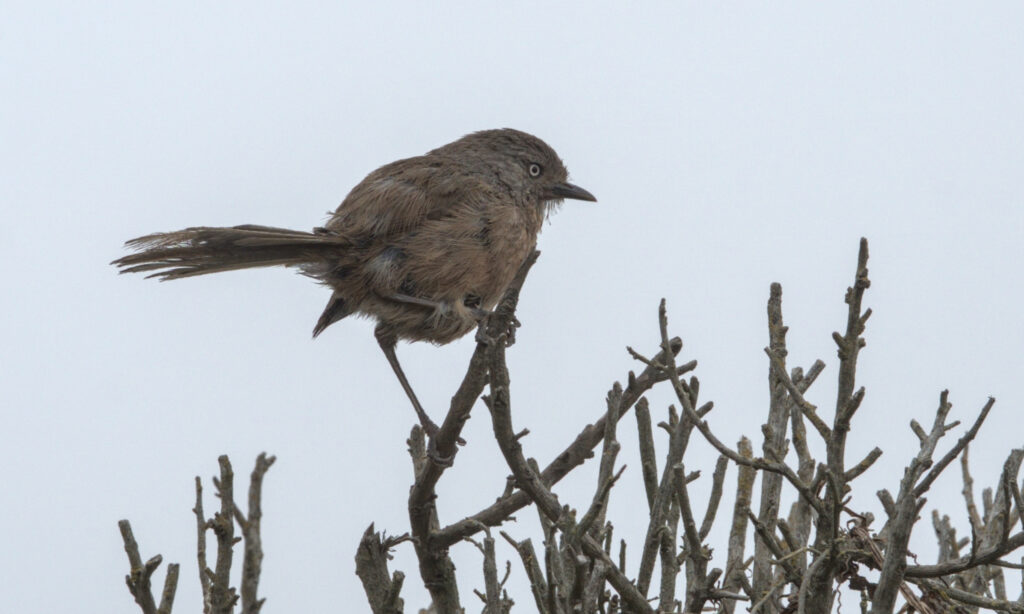
We looked at trends in the data of 42 bird species. Wrentits, which favor dense shrubs, declined after the fire. This made sense considering the destruction of the chaparral canopy. Western meadowlarks, which breed in open grasslands, had been undetected in our counts previously. After the fire, they were regularly found in an area where woody cover had decreased.
For most species in this study, the picture was less clear. We found decreases in 10 species and increases in two. Western meadowlark was also seen to increase in our point counts only. For another 27 species, there wasn’t strong evidence to show that fire affected their abundance.
Accounting for the differences
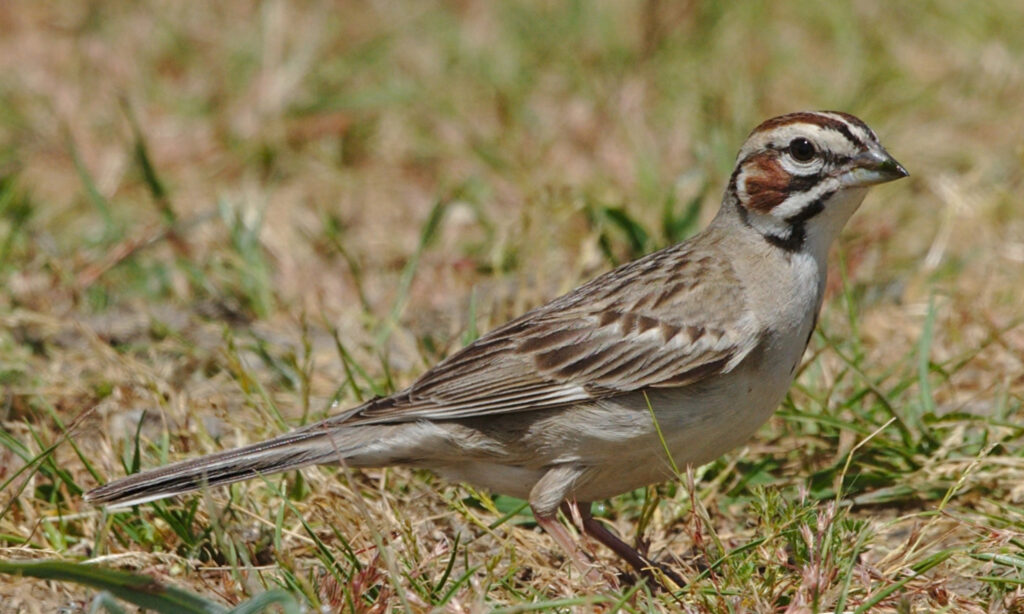
In some cases, the differences between the ways the birds were counted in each dataset seemed to have shaped the patterns in the data. Our point counts had a set protocol: during each visit, we counted for five minutes at 16 specific locations, whereas eBird contributors were free to stop wherever and whenever they chose along the road, and weren’t prompted to restart their counts every five minutes. This might explain why eBird data showed only an 18 percent increase in lazuli bunting, a species with a reputation for benefiting in post-fire landscapes, while our counts showed they increased 684 percent.
Familiar stories with different results
This isn’t the first time we have examined bird responses to fire along Pine Flat Road. Former Director of Conservation Science John Kelly published a report about abundances of birds in this area before and after the 2004 Geysers Fire. Given the overlap in fire footprint, we were curious to compare these results and found inconsistent trends within species. We also compared trends with those from a 2012 meta-analysis looking at fire responses of many of the same birds across the lower 48 states, which did not all agree with our findings.
Species resilience and wildfire
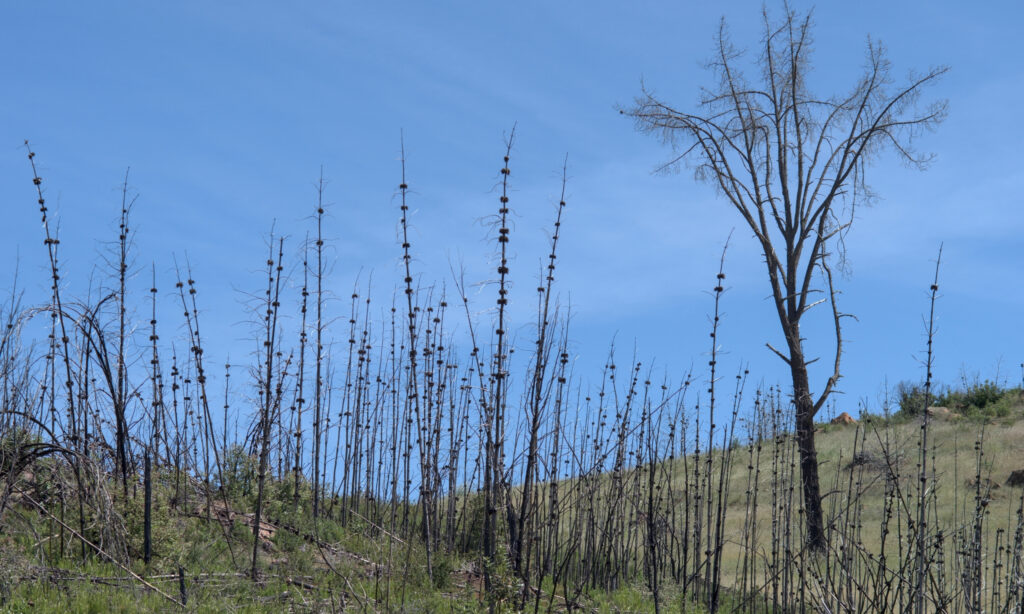
Wildfires can pose a severe ecological risk to habitat and the species that depend on it. Climate change and fuel buildup (exacerbated in many places by fire suppression) have been altering the behavior and size of wildfires, with high wind events and exceptional weather conditions producing abnormally intense and large wildfires. High-intensity fire can lead to habitat type conversion, where one habitat type ends up being replaced by another. This phenomenon can lead to long-term extirpation of particular habitat types and the species they support.
Comparing which birds are present before and after a fire is a relatively quick way to see which species appear to be responding well to changes in habitat and which seem to be struggling. Species we detected before the Kincade Fire appear to have persisted, and some even thrived, though more responded negatively.
One of the other important learnings from our study was considering the differences between our findings and the trends observed after the 2004 Geysers Fire. Looking at this earlier data, would not have been enough to predict how birds would respond to the Kincade Fire. Fire behavior is complex, as is the cascade of ecological consequences that follow fire. While we may have a reasonable idea how some birds are going to respond to a wildfire, our results caution us against inferring too broadly.
Prescribed fire and adaptive stewardship
As we consider using prescribed fire to steward landscapes for the health and maintenance of ecosystems, our results serve as a reminder of the value of learning as we go and using what we learn to guide what comes next. Monitoring how plant and animal communities respond to fire is a critical part of tailoring our work to effectively support biodiversity.
Join us in navigating the road ahead
Supporting birds and the habitats they rely on requires a long-term commitment. We’re in it for the long haul. Will you support us through membership with All Hands Ecology?