|
Getting your Trinity Audio player ready...
|
More than a weed problem
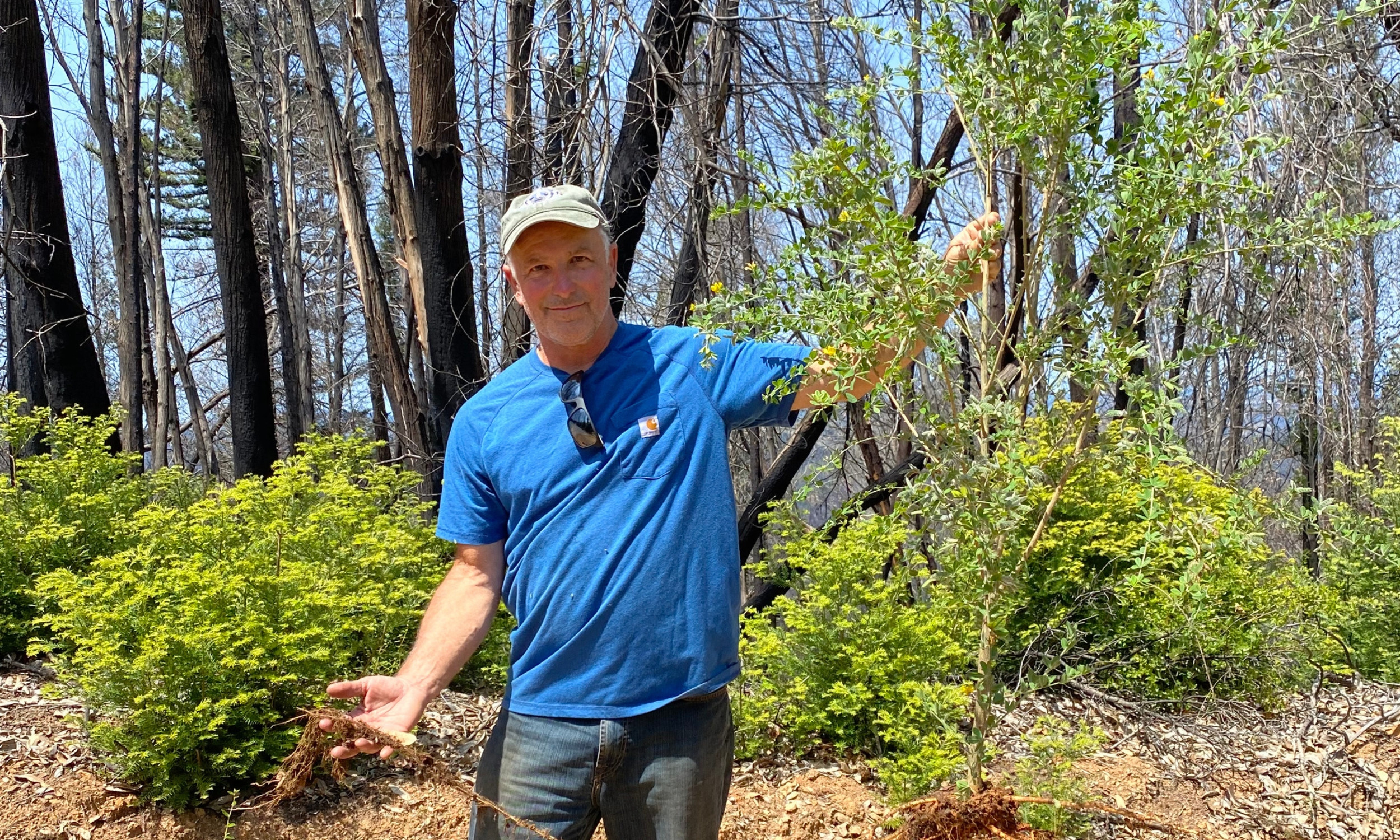
“Nothing more than a mouse could navigate through a dense broom stand like that,” Dan Grout shared. On a parcel of family land in the Mill Creek Watershed near Healdsburg, the French broom was looming, standing six to 20 feet tall. After years of unmanaged growth, plus a flush of sprouts emerging after the 2020 Walbridge Fire, the broom had become an “impenetrable” wall.
For Grout, as a landowner and restoration biologist, the thicket was more than a weed problem. It crowded out native habitat and created a continuous layer of flammable fuel beside the home the family had rebuilt after the Walbridge Fire. Methods he had used over the previous six years on other areas for controlling the broom, such as pulling, spraying, scorching, cutting, and grazing with goats, were not going to address the scale of the situation. “The number one concern,” he said, “was how flammable it was, even when still green.”
Grout turned to trusted community partners for help with an approach that made him both curious and initially apprehensive: using prescribed fire as one step in a coordinated treatment strategy. The project that took shape on his family’s land would test whether cutting, burning, and follow-up care — backed by technical expertise and community support — could reduce hazardous fuels, restore native habitat, and transform an overwhelming private burden into collective stewardship.
Tools to match the project
“We had done every other form of broom removal before this project,” said Steve Pye, principal of Spye Conservation, the stewardship company contracted by Sonoma Resource Conservation District for the Mill Creek broom removal project. The project is one of several happening across Sonoma County as part of a grant from the National Fish and Wildlife Foundation to reduce invasive plant populations in post-fire areas.
“The property was steep and the broom infestation was very large. Hand-pulling and machinery were out of the question,” said Pye. “There was another treatment strategy being tested by Santa Rosa Junior College’s Wildfire Resilience Program at Shone Farm. I reached out to Asa Voight, who is a supervisor in the program.”
Fire wakes up the seed bank
“French broom seeds sit in the soil waiting for a trigger to set off emergence,” said Voight, who is also a conservation science project manager for the Laguna de Santa Rosa Foundation.
French broom is not only labor-intensive to remove, but the mature plants leave an extensive and persistent seed bank. A single mature French broom plant can produce up to 10,000 seeds in a single season. Millions of seeds can stay dormant in the soil for decades.
“What we know is that fire triggers mass germination for French broom,” Voight added. When stimulated by wildfire, seeds emerge into a sunshine-flooded growing environment if the shading canopy has been burnt.
“Fire can also be an essential tool for sustainable management of French broom,” Voight explained.
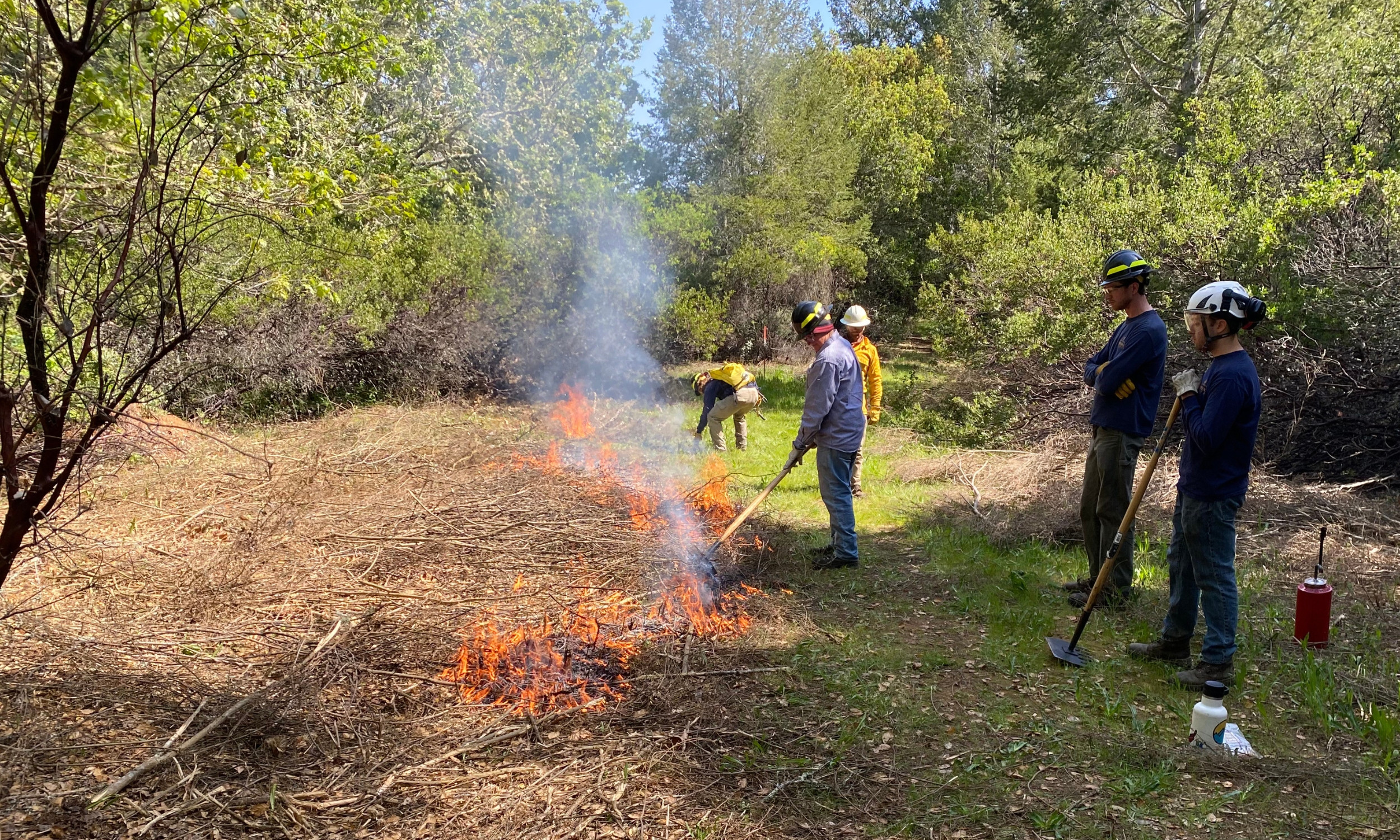
Voight and his colleagues spent five years experimenting with multi-step treatments for larger stands of broom, where manual removal alone wasn’t practical. Their approach uses fire to stimulate germination from the seed bank, addressing both existing plants and the seeds that could fuel future reinvasion. First, they cut the broom close to the ground using brush cutters, leaving the cut material spread across the treatment area to dry. They then burn the material to stimulate a flush of dormant seed, followed by flame weeding or repeat brush cutting to control the vulnerable seedlings. By targeting both established plants and the extensive seed bank, this approach aims to reduce the likelihood of broom returning.
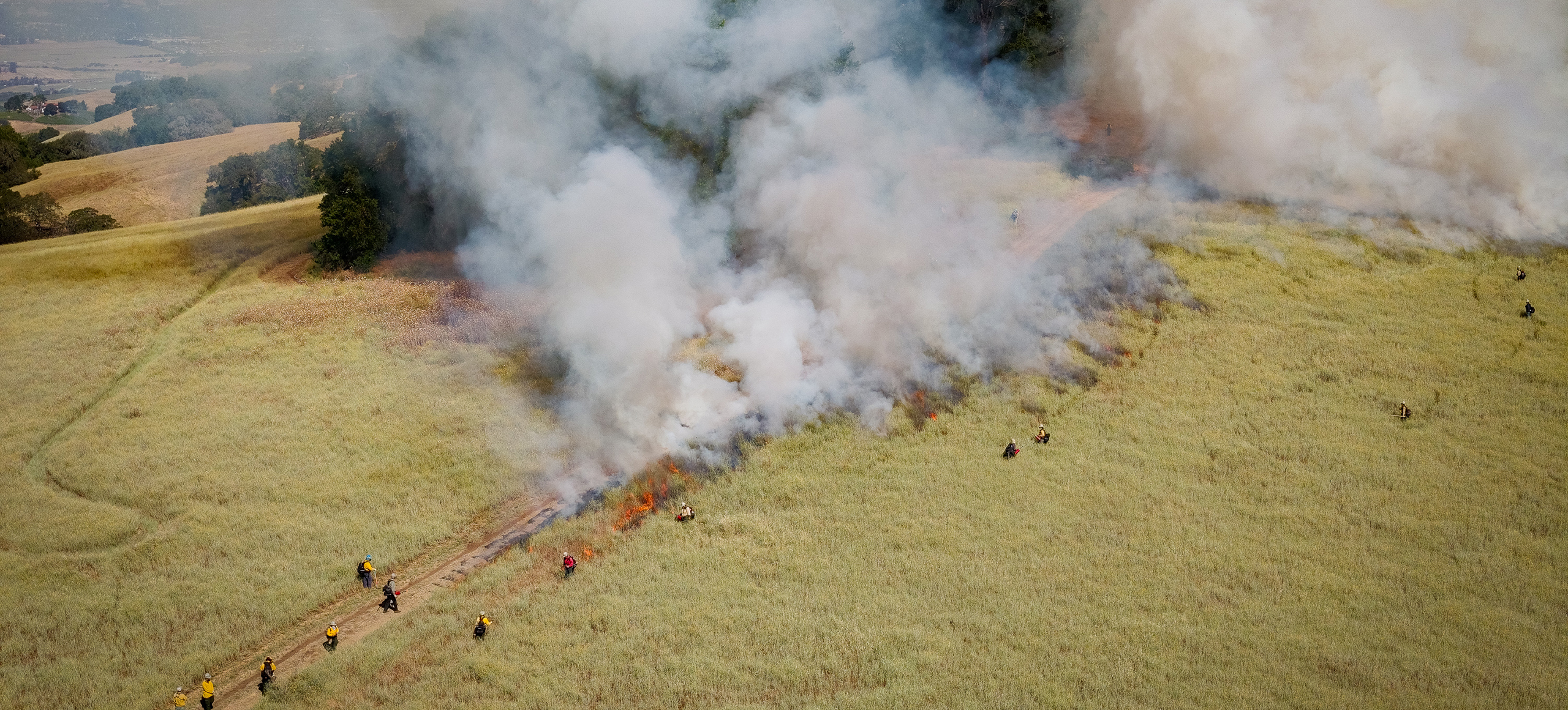
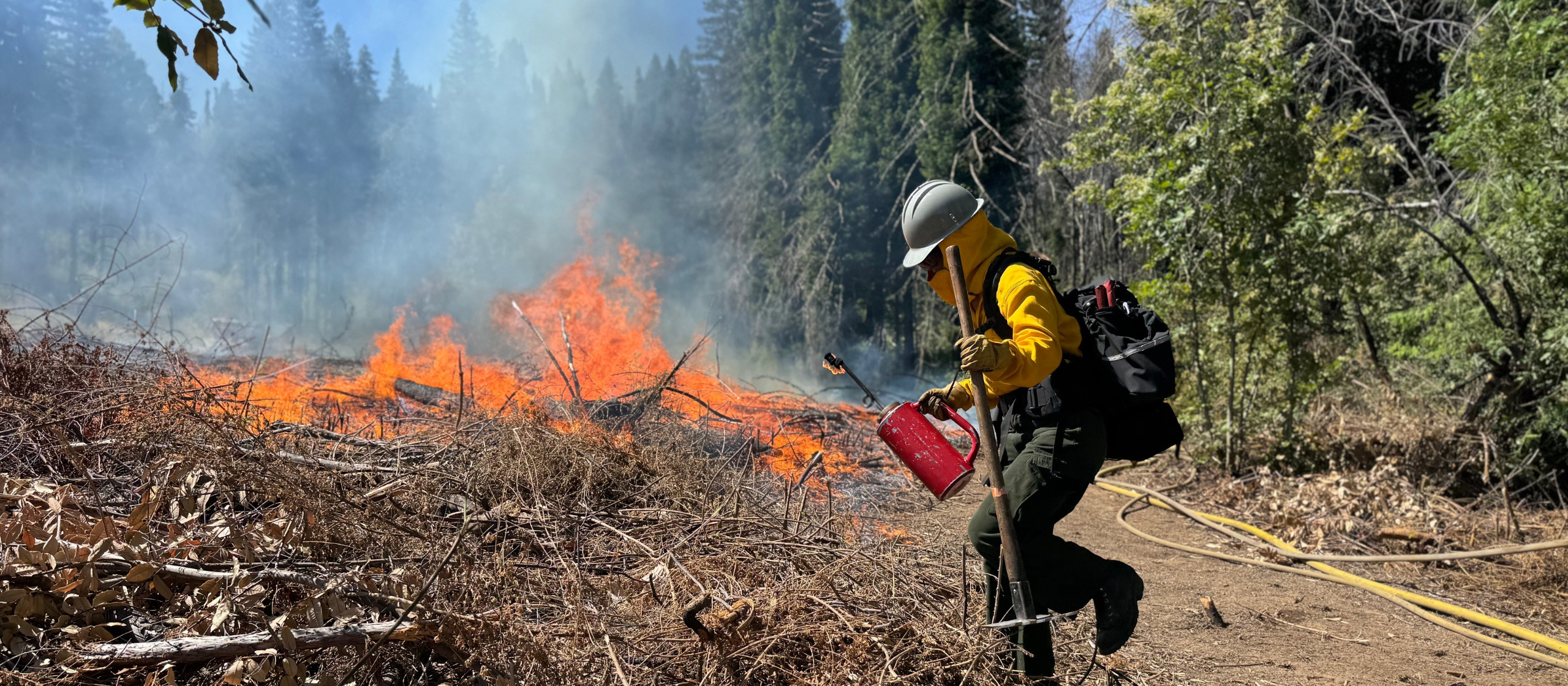
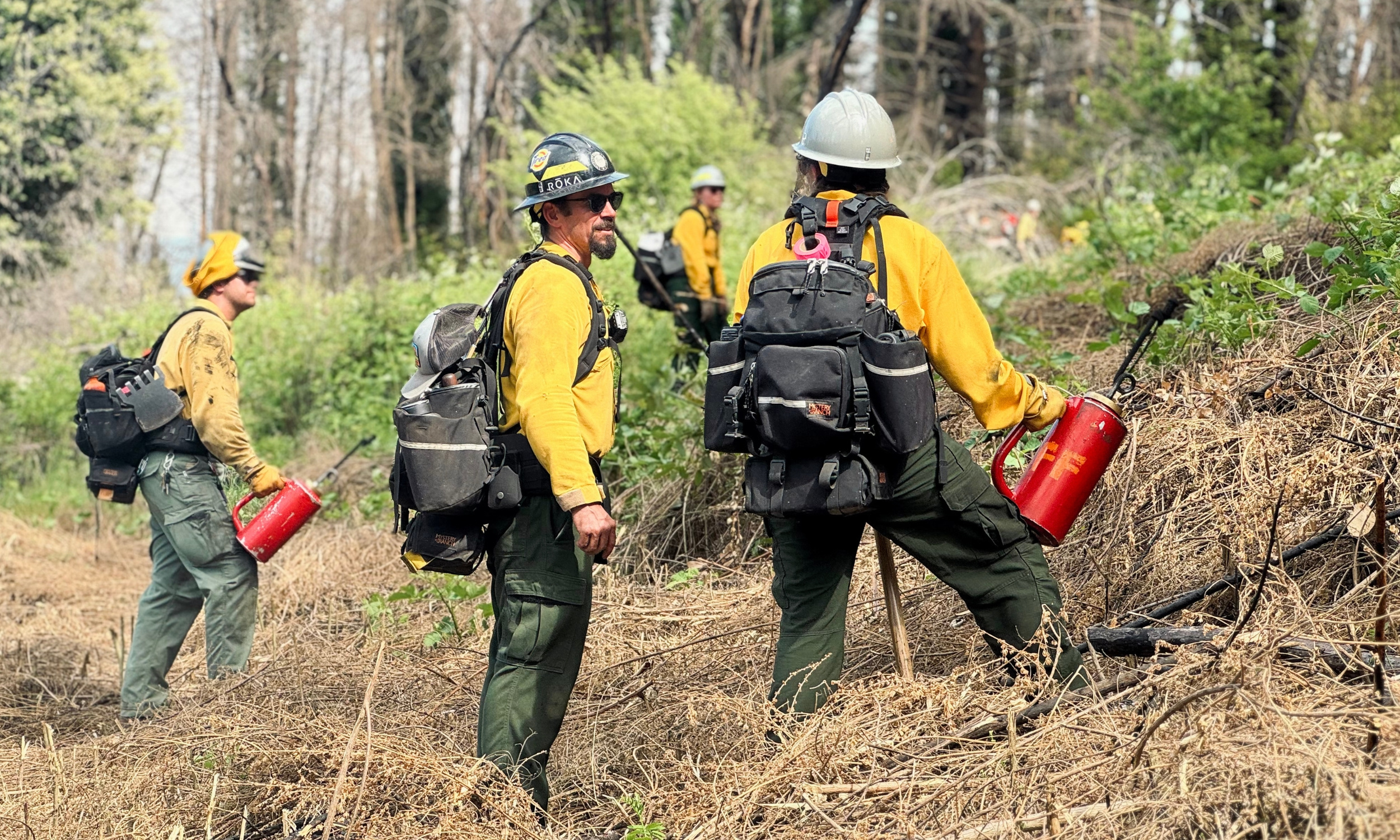
After consulting with Voight, Pye proposed a similar protocol for the project on Grout’s family land. Included in the plan was a seven-acre prescribed burn in the redwood forest operated by our Fire Forward program and the Good Fire Alliance.
Using good fire in combination with other treatments
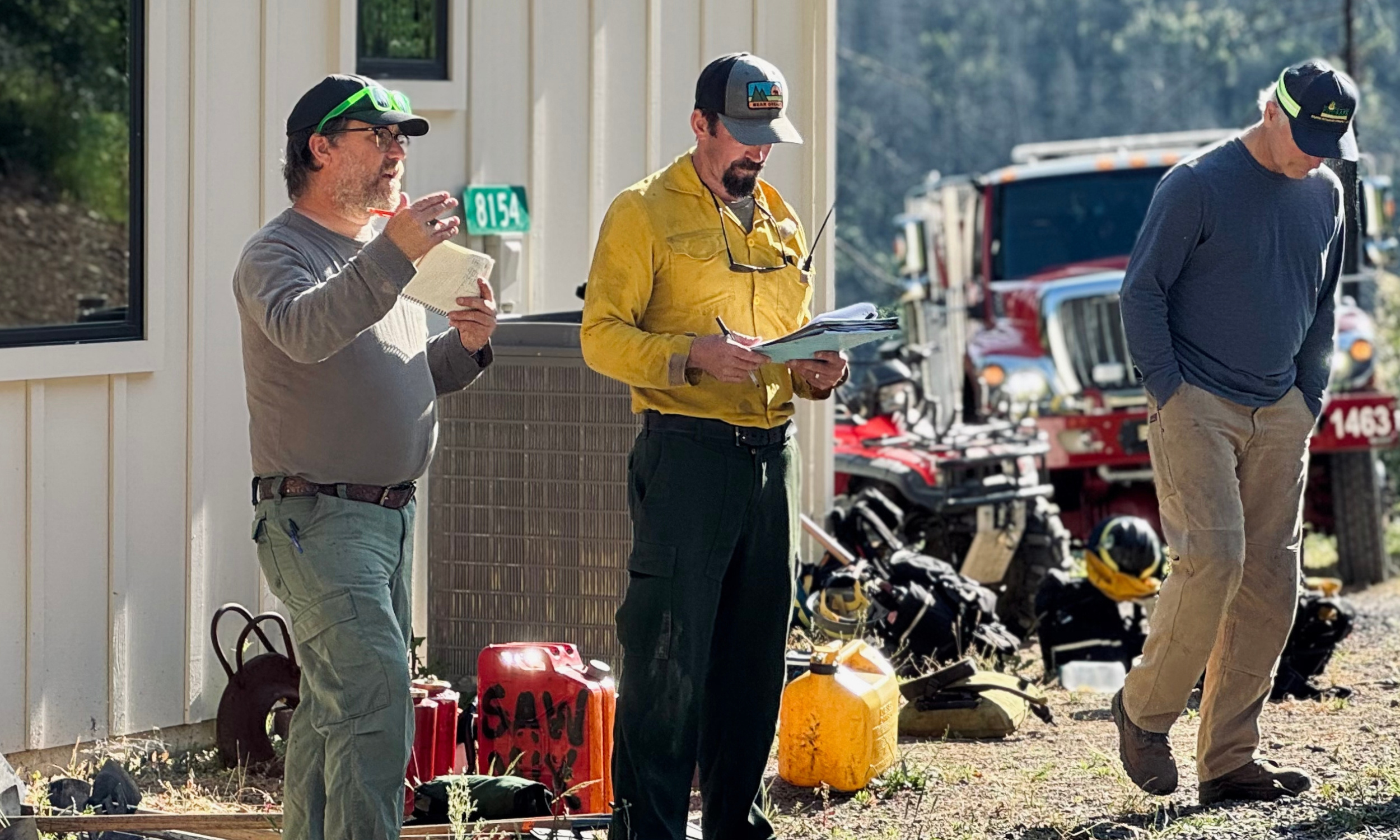
“We were interested in the project because it treated fire as one piece of the puzzle in a broader stewardship strategy, rather than a stand-alone solution,” said Brian Peterson, All Hands Ecology fire ecologist and the burn boss on the Mill Creek operation.
Peterson connected the project to three other stewardship goals as well: helping landowners care for their land, reducing invasive species, and working in coordination with partners to improve ecological health.
“Another reason we came in on the burn was because Steve [Pye] pitched it as his final assignment for the Fire Forward Fellowship,” said Peterson, “which culminated in him becoming a California state-certified prescribed fire burn boss (CA-Rx).”
Shifting to optimism
Pye’s five-person crew spent five weeks in the early spring of 2025 cutting the broom stand on Grout’s family land into a knee-deep layer. Then they waited a few months for it to dry. As the day of the prescribed burn grew closer, Grout was both curious and uneasy.
“Bringing fire back only a few years after we’d been burned out was a little nerve-wracking,” said Grout.
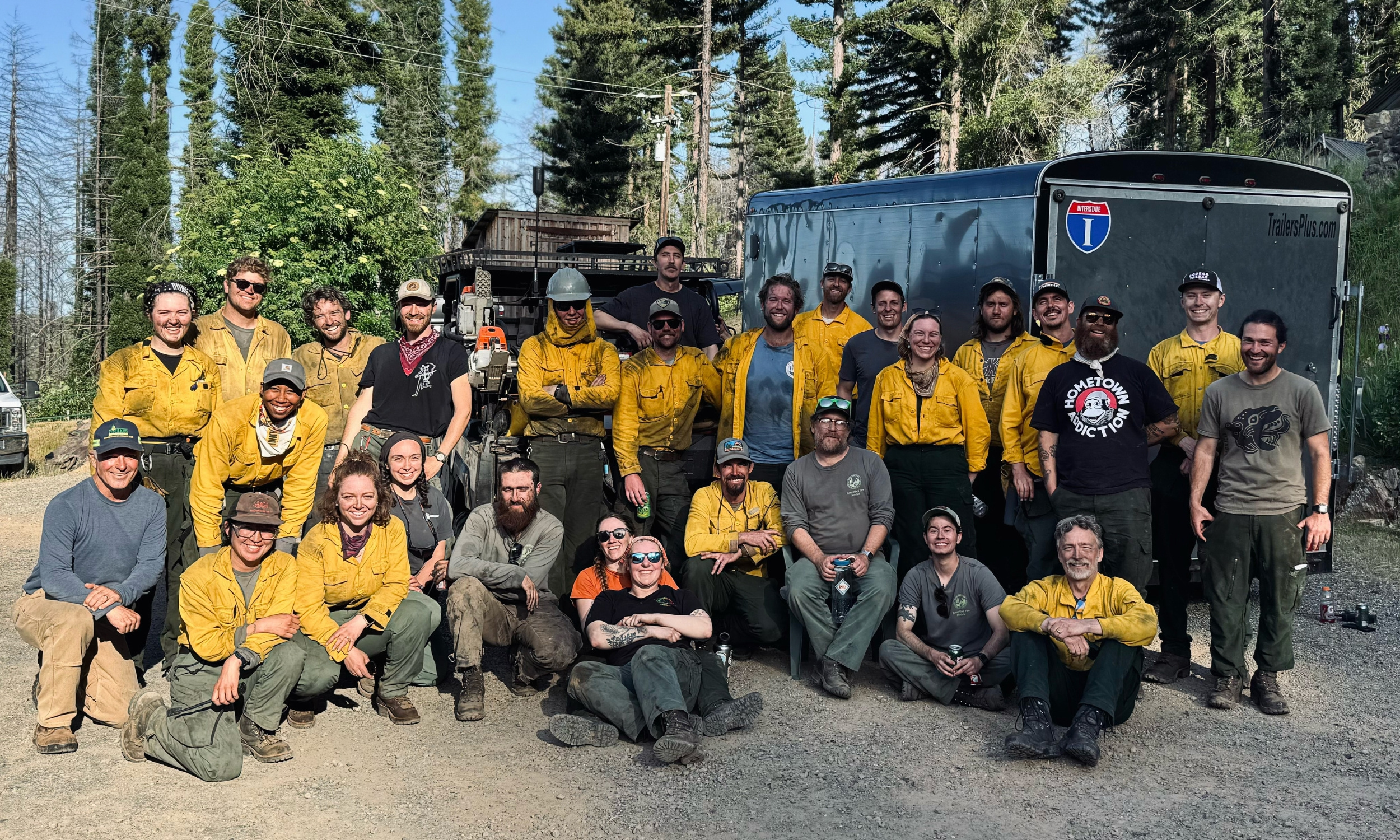
On a mild day in the middle of May, the Mill Creek operation got underway. Grout’s trepidation soon shifted as the professionalism of the partners who gathered for the operation earned his trust. Seeing dozens of people from different agencies come together for the prescribed burn on a remote property left him grateful and optimistic, a sense of community flourishing alongside the ecological recovery he is deeply committed to.
“It can be a lonely existence tilting at windmills, trying to remove invasive species and restore large areas of redwood forest, but when you have 40 or 50 people on your property…all pulling in the same direction, it gives you an immense amount of hope,” Grout reflected.
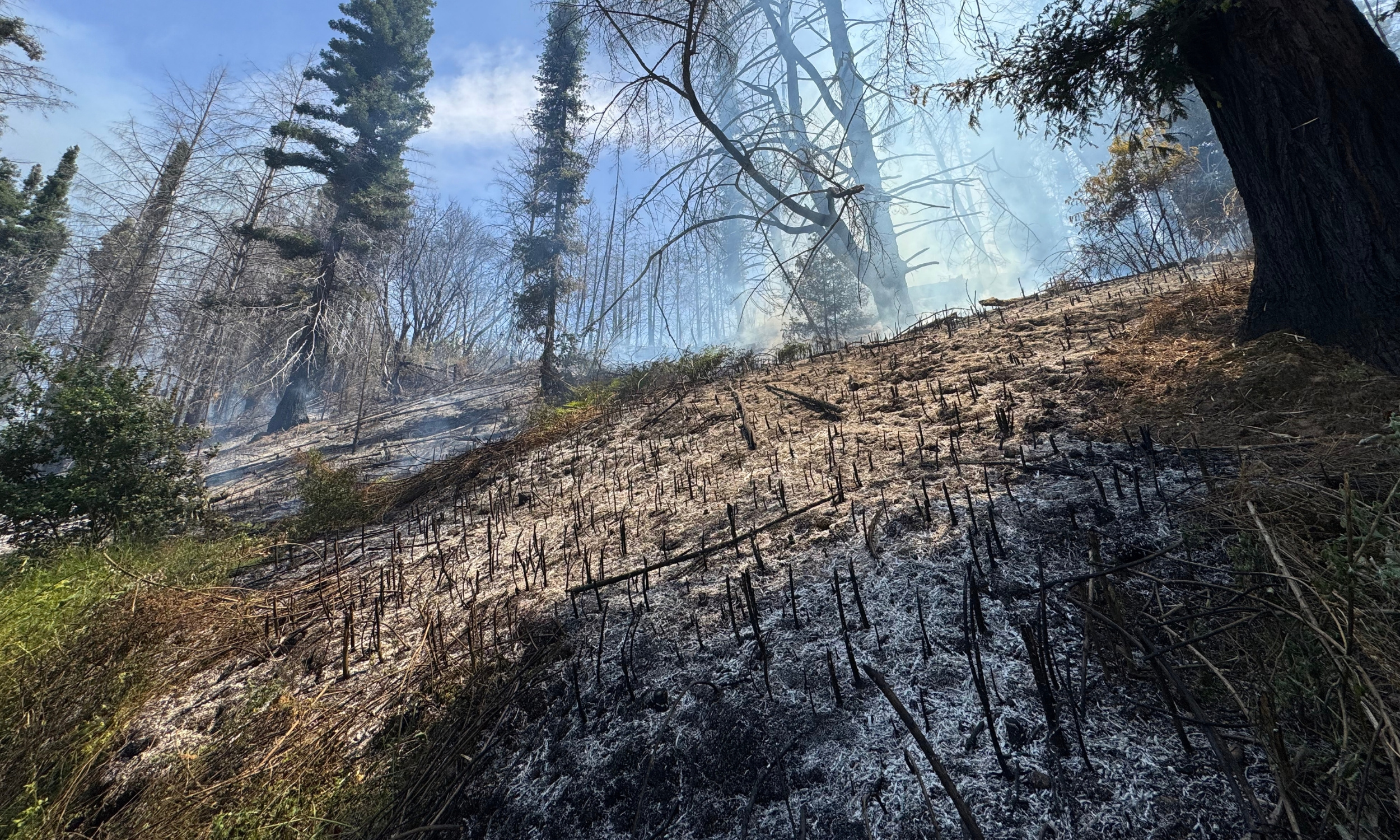
After the burn, Grout began to watch the land for signs of life. He saw that most of the broom was scorched and killed, while the fire-adapted redwoods survived. Within weeks he saw ferns. He also saw a flush of broom emerging, setting the stage for a follow-up treatment to eliminate the resprouts.
A circle of support for landowners
The project on his family’s land gave Grout confidence in the treatment strategy and showed him something equally important: landowners don’t have to face land management challenges alone.
“Taking on this stuff can be daunting even for somebody in the field like me,” Grout said. “But there are a lot of good people and organizations willing to help. Taking an active role in trying to manage and steward your lands, whether you have a home on it or not, is really important.”
In reflecting on his experiences with fire, the Walbridge Fire and then, five years later, the Mill Creek burn, Dan shared: “I’d rather have good fire, with 50 highly trained people doing a prescribed burn, with two fire engines idling nearby, than be sitting here alone with a garden hose during a wildfire.”
Need help caring for your land?
Get support with good fire on our resource page and landowner assistance through the Sonoma Resource Conservation District.
Support our work by making a donation.
Header photo: Erika Lutz