|
Getting your Trinity Audio player ready...
|
Storytelling for change
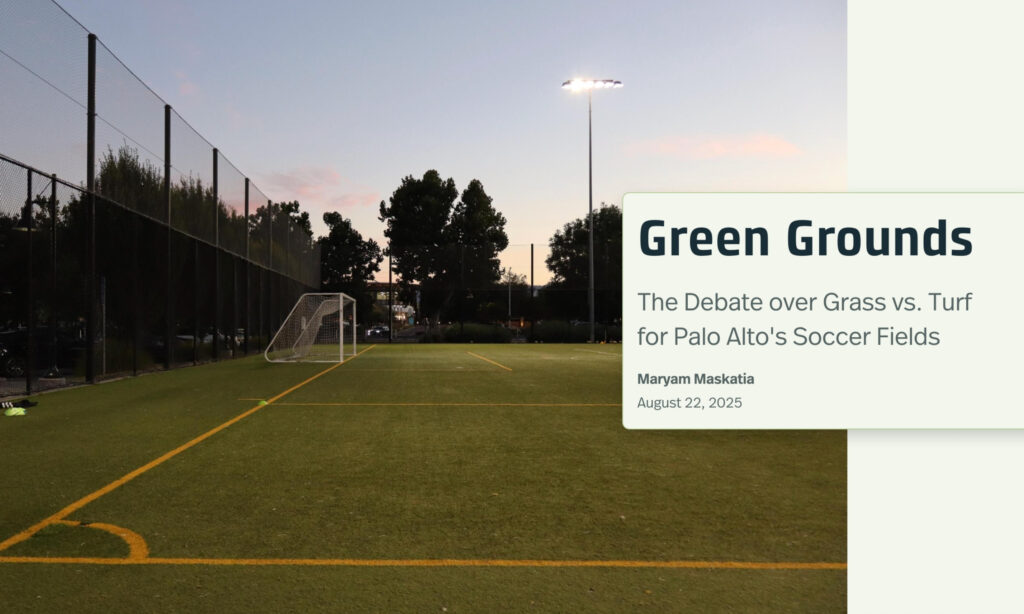
“In the summer of 2022, a teammate of mine injured her ankle while practicing with the rest of our team on artificial turf,” begins Maryam Maskatia’s storytelling project from the Conservation Science Intensive (CSI) last summer.
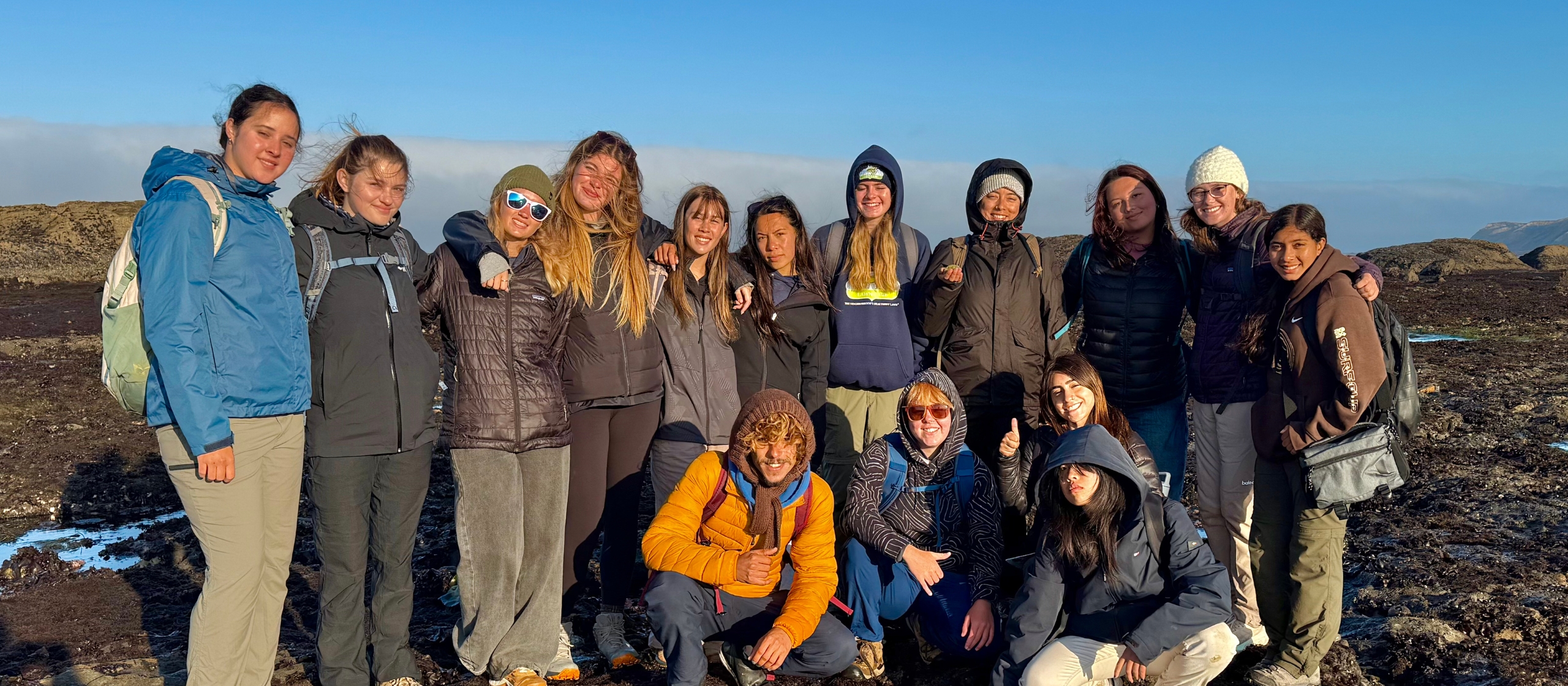
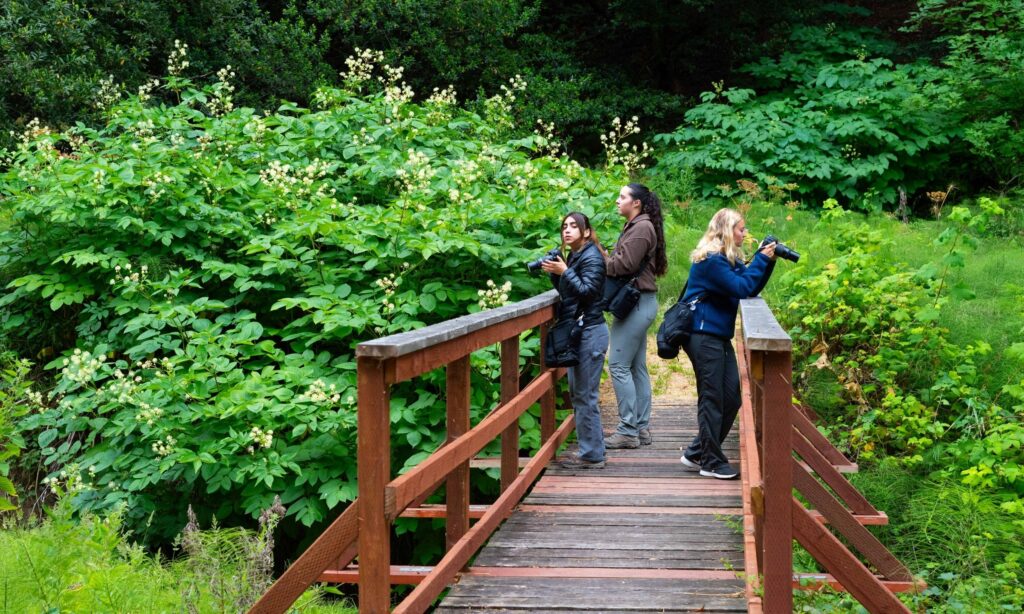
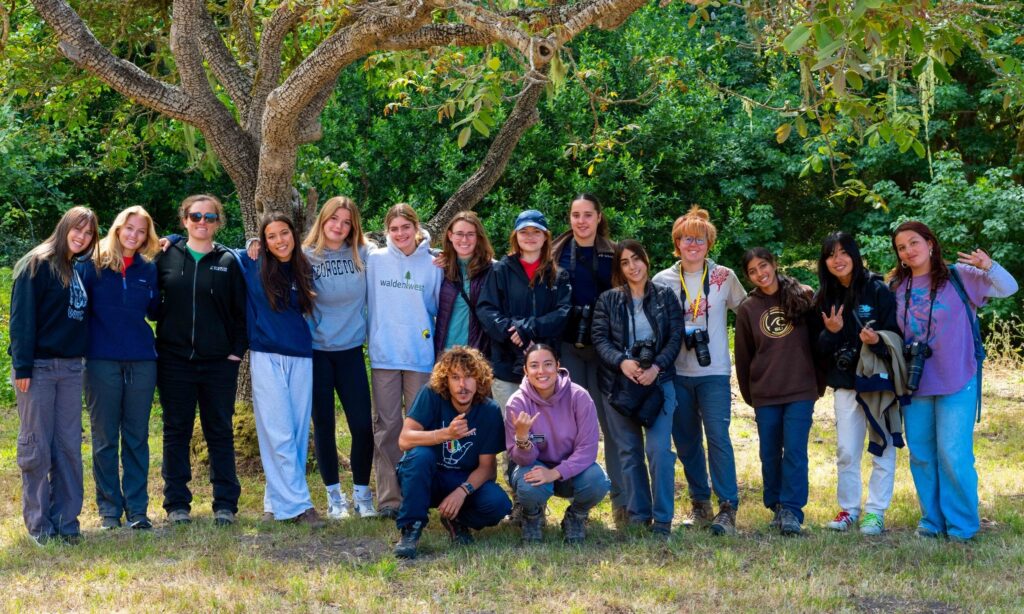
During the weeklong CSI course, students were introduced to storytelling through science communication, conservation photography, and ArcGIS StoryMaps — a web-based tool that uses maps, multimedia, and text to tell a story or present information. Mentored by the education staff, students used the StoryMap platform to develop final projects — giving voice to their personal stories, identifying conservation issues they care about, and becoming community advocates.
Her story
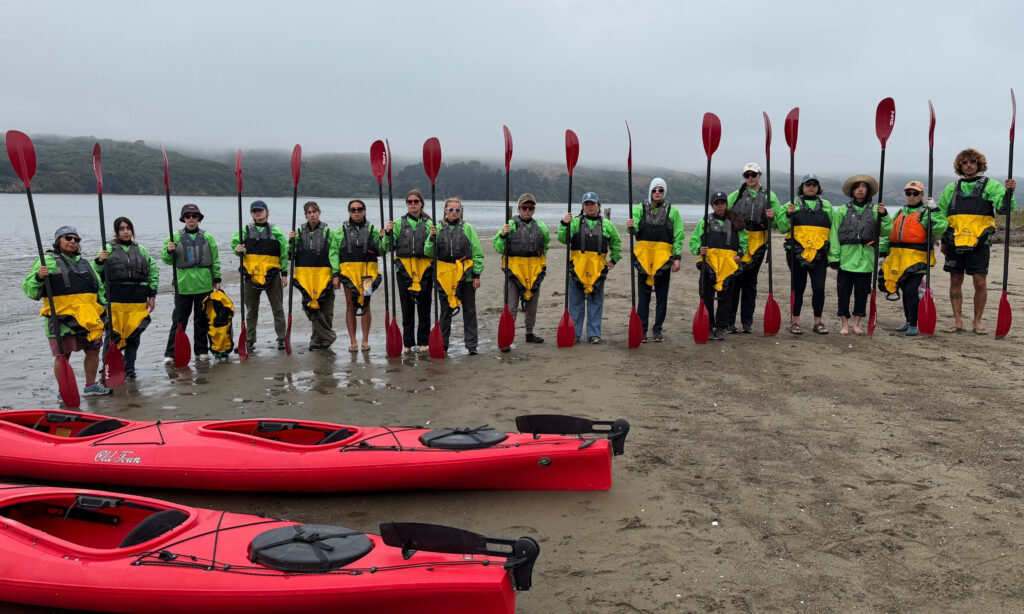
The CSI program is designed to mentor and educate youth in high school and entering college, who identify as young women or non-binary, to find their passion in the conservation field. The theme of storytelling played a major role in the workshops during the weeklong camp.
“We designed trainings in CSI that help young leaders build confidence in sharing their own stories,” Catie Clune, director of education, shared. “We highlighted storytelling as a powerful tool for conservation and a force for lasting change.”
Becoming an advocate
For Maskatia, who plays soccer year-round in Palo Alto, this passion found its way into her CSI project. Maskatia saw the StoryMap project as an opportunity to get involved in the community debate about whether to build new sports fields from artificial turf or grass.
“The topic is really relevant to me and a lot of my friends,” Maskatia shared. “The fields are right by my house, and I practice there three times a week.”
As a busy high school student, it hadn’t been easy for Maskatia to find the time or the means to articulate her thoughts on the topic. Learning StoryMaps was a chance for Maskatia to get involved in an issue she had a vested interest in — researching the environmental and safety implications of artificial turf and grass and creating a resource to share with her community.
Maskatia plans to share her StoryMap with people in her soccer club, the consulting group in Palo Alto working on testing field surfaces, and decision-makers at the city level. She has also identified another high school soccer player as a potential collaborator.
Telling conservation stories
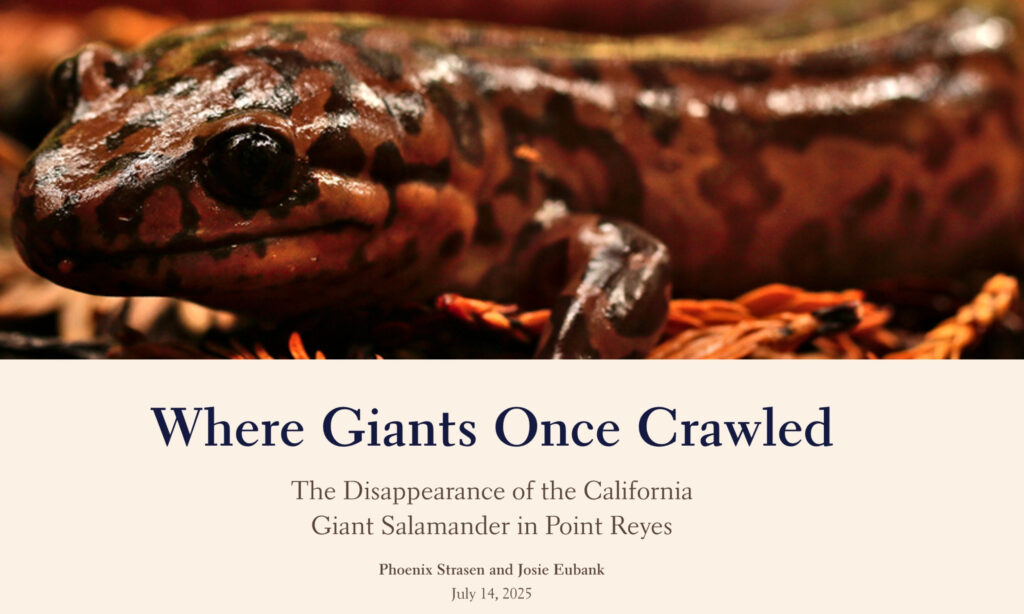
For Phoenix Strasen and Josie Eubank, CSI peer mentors, finding dead salamanders at Martin Griffin Preserve prompted their StoryMap project.
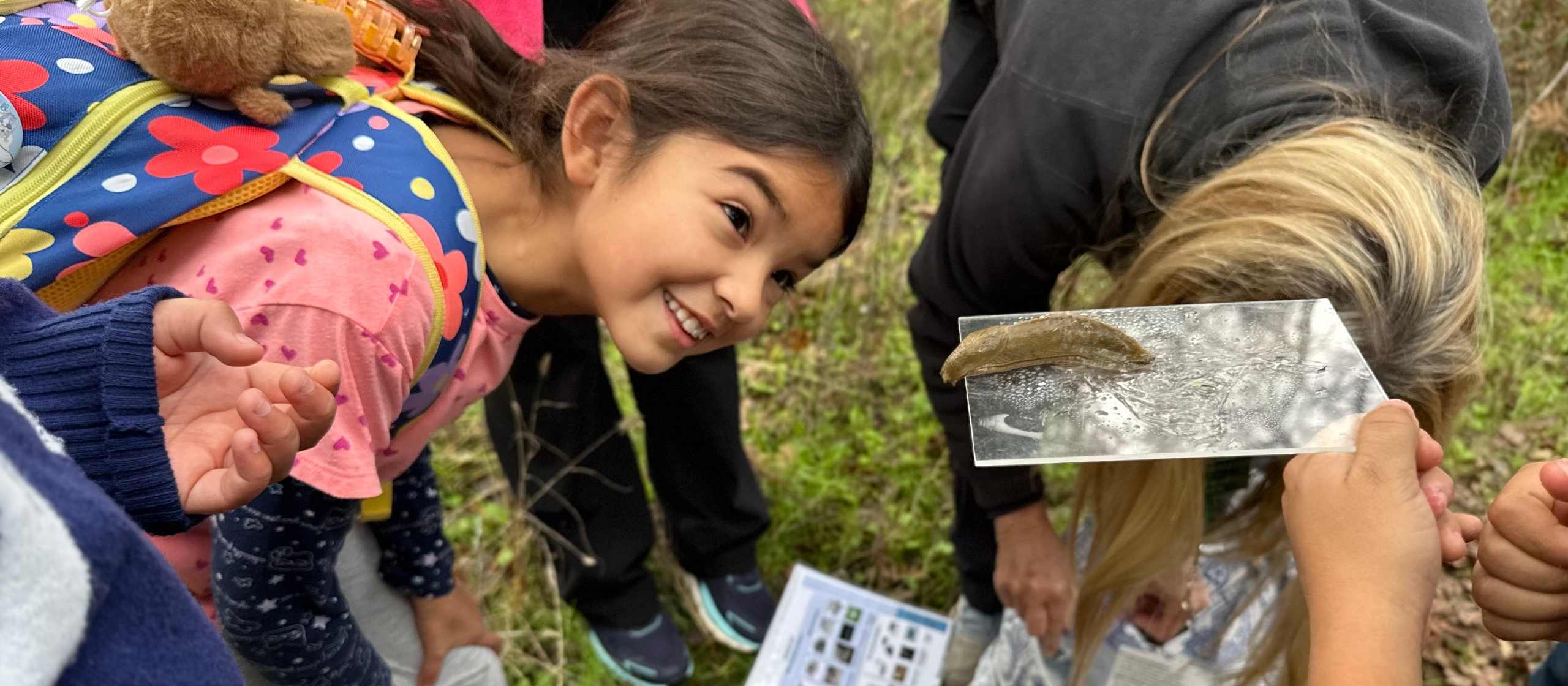
“After the CSI students found dead salamanders on a field trip, we talked about what we know about the die-offs from previous years, and what we are still curious about,” shared Clune.
Strasen and Eubank created a StoryMap with the research Clune provided and included photos, an interactive map, traditional ecological knowledge about giant salamanders from the Karuk people, and a call to action for community scientists to help monitor California Giant Salamanders in West Marin.
Developing career tools
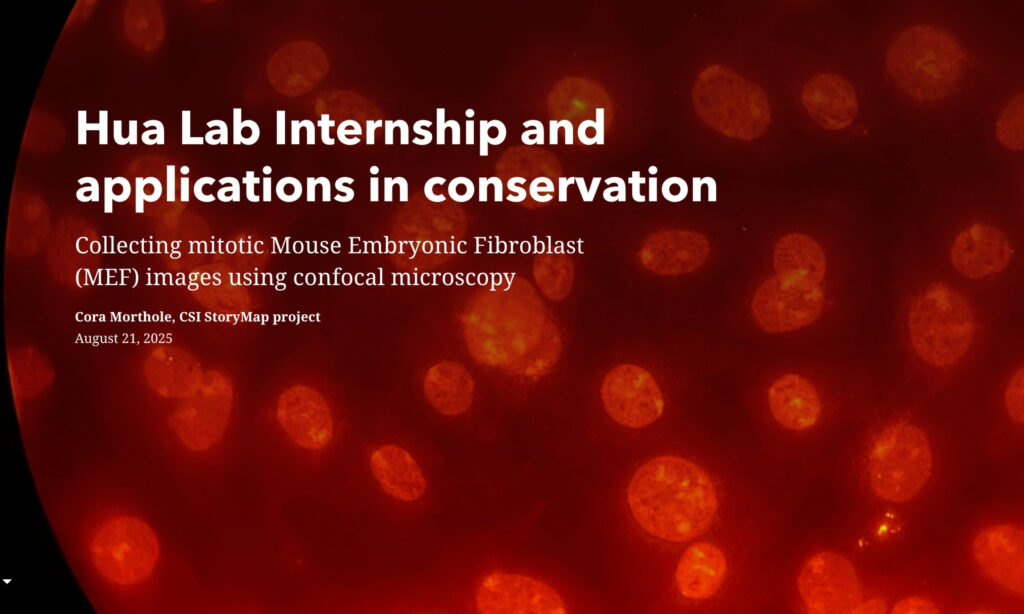
“Another motivation for having students do a project was for the students to have something to take away from CSI for career development,” Emiko Condeso, who taught CSI students to use StoryMaps, explained. “StoryMaps has many applications including building resumes. Cora’s project is an example of that.”
Cora Morthole’s interests in marine biology, conservation, and lab research came together in her project about her summer internship at the Hua Lab at Sonoma State University.
Morthole’s StoryMap details the step-by-step process of the microscope photography methods she learned in the lab, demonstrating training she can take into her career. Her project was also a venue for her to express her voice — sharing her thoughts about the research and theorizing how it might relate to marine conservation, her passion.
“My knowledge of conservation allowed me to research and find connections between the lab instruments I was using and their applications in conservation work,” wrote Morthole in the opening paragraph of her project.
The future is now
CSI students walk away with much more than hands-on skills in conservation and science. The program is an incubator for emerging young leaders to identify their passions and receive caring mentorship and training to forge their own pathways.
“Being able to talk about yourself, be proud of who you are, and your personal story are important elements of CSI for both leadership and career development,” shared Condeso. “People who identify as female are oftentimes told to recede into the background.”
For Maskatia, who is in her final year of high school, she has discovered the powerful ways in which stories, including her own, can impact change.
“Sometimes scientists communicate with a whole bunch of data, but maybe that isn’t actually helpful when they’re trying to convey something to a broader audience,” Maskatia shared. “Storytelling can reach and resonate with a greater group of people.”
Support youth in becoming conservation leaders
The Conservation Science Intensive is a unique program for youth to gain a foothold in the conservation field at the important transition of high school into college. Your support makes a difference in the career paths of these emerging leaders. Become a member today.
Do you know a young person who carries a spark for the Earth and is ready to find out what it could become? The priority deadline to apply for the Conservation Science Intensive is February 17 at 5 p.m. (PST). Apply now.
Read the CSI Storymaps
Where Giants Once Crawled: The Disappearance of the California Giant Salamander in Point Reyes (Josie Eubank and Phoenix Strasen)
Hua Lab Internship and applications in conservation: Collecting mitotic Mouse Embryonic Fibroblast (MEF) images using confocal microscopy (Cora Morthole)
The California State Lichen (Lilian Dong)
Green Grounds: The Debate over Grass vs. Turf for Palo Alto’s Soccer Fields (Maryam Maskatia)
Tide Pools & Sea Anemones (Ginger Maxfield and Freya Stasko)