Many species of migratory birds fly south from their arctic and boreal breeding grounds to spend winters in the waters Tomales Bay, where a diversity of habitats provide food and refuge. Shorebirds, such as sandpipers and plovers, forage on the extensive mudflats of Lagunitas and Walker creeks, while waterbirds such as ducks, loons, and cormorants depend on eelgrass “meadows” and the deep open water of the bay.
A safe place to feed and rest during the winter months is a critical part of the life cycle of shorebirds and waterbirds, and their arrival in large numbers each fall has cascading effects on the community of the bay. The birds play important ecological roles such as in the food web, and also provide cultural values to humans such as birdwatching, hunting, and photography. They depend on Tomales Bay, and they also are an important part of what makes the bay special.
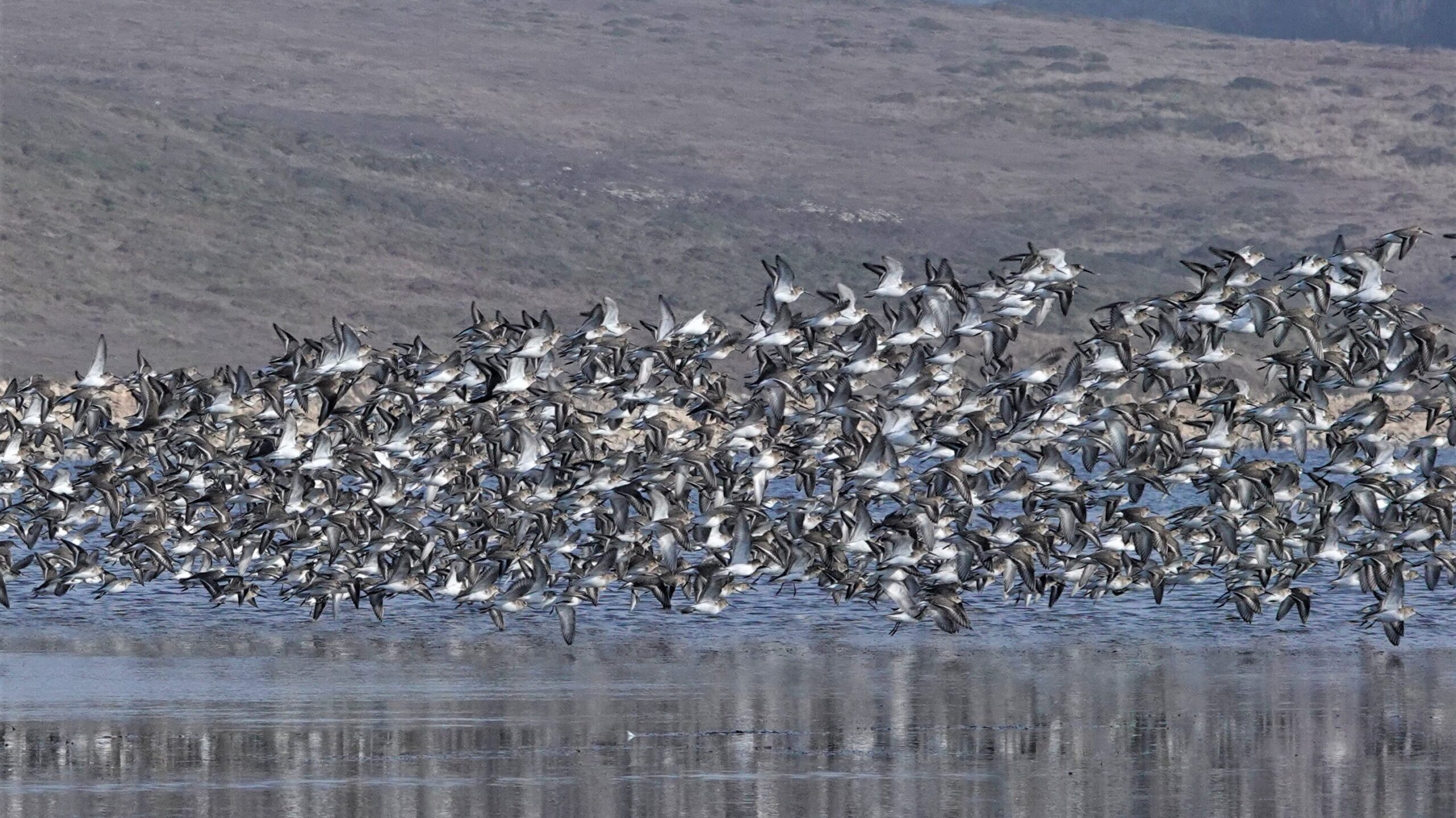
Dunlin in flight on Tomales Bay. Photo: Nils Warnock
Birds are known to be sensitive to their environment, so tracking their abundance helps us to both understand the status of their populations and the health of this rich and diverse coastal habitat. We’ve been monitoring shorebirds and waterbirds since 1989 with the assistance of knowledgeable volunteers.
We share this monitoring data here so that managers, researchers, and the public can have a better understanding of how Tomales Bay bird populations are changing and take action to help reverse negative trends.
The big picture: shorebirds and waterbirds are in decline
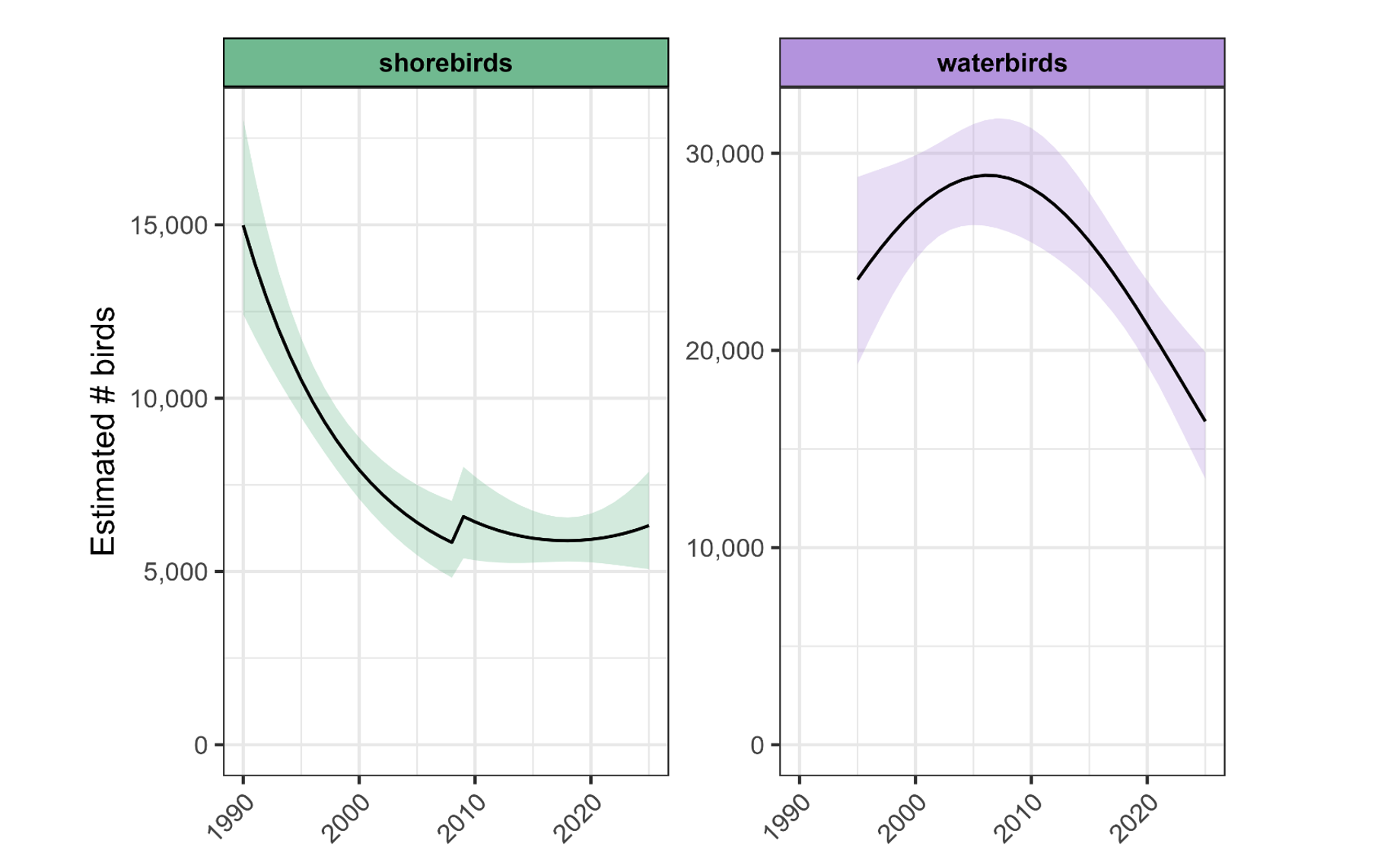
Overall, our study shows a nearly 33% decline in waterbird and shorebird abundance on Tomales Bay over the last 30 years.
Looking at changes year by year, we see that shorebirds declined steeply until 2005. In contrast, waterbird numbers increased somewhat until about the same time period, then declined in the last 10-15 years.
Note, we use statistical models to transform the raw data from our counts into an average number of birds using the bay each winter. These models allow us to smooth out year to year variation due to fluctuations in rainfall, upwelling in the ocean, and other factors. If you’re interested in more detail on these models, check out our peer-reviewed papers:
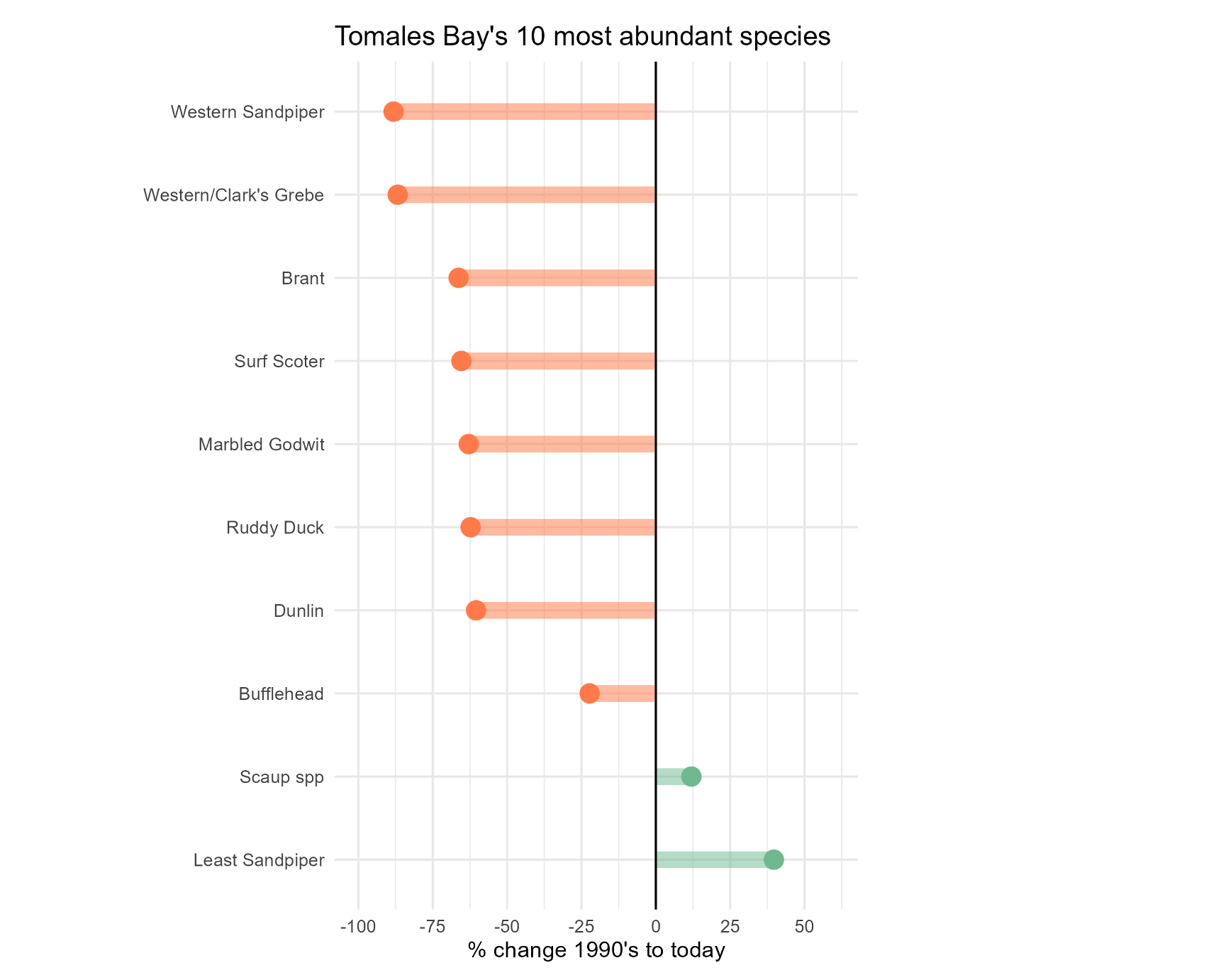
A clear trend, mirroring what we’ve seen up and down the West Coast, is the dramatic loss of what once were some of our most numerous species. Ten species averaged at least 1,000 birds at the beginning of our study. Eight of these species have declined, with by-species declines ranging from 22-88%.
Meanwhile, the two increasing species, Scaup and Least Sandpipers, only went up by 11% and 39%. Across all species, the declining species have lost over 18,700 birds while the increasing species have only added just over 3,800 birds.
In terms of total number of birds lost, Western Sandpiper, Dunlin, Surf Scoter, and Bufflehead are among the most concerning. Together, just these four species have lost over 12,700 birds.
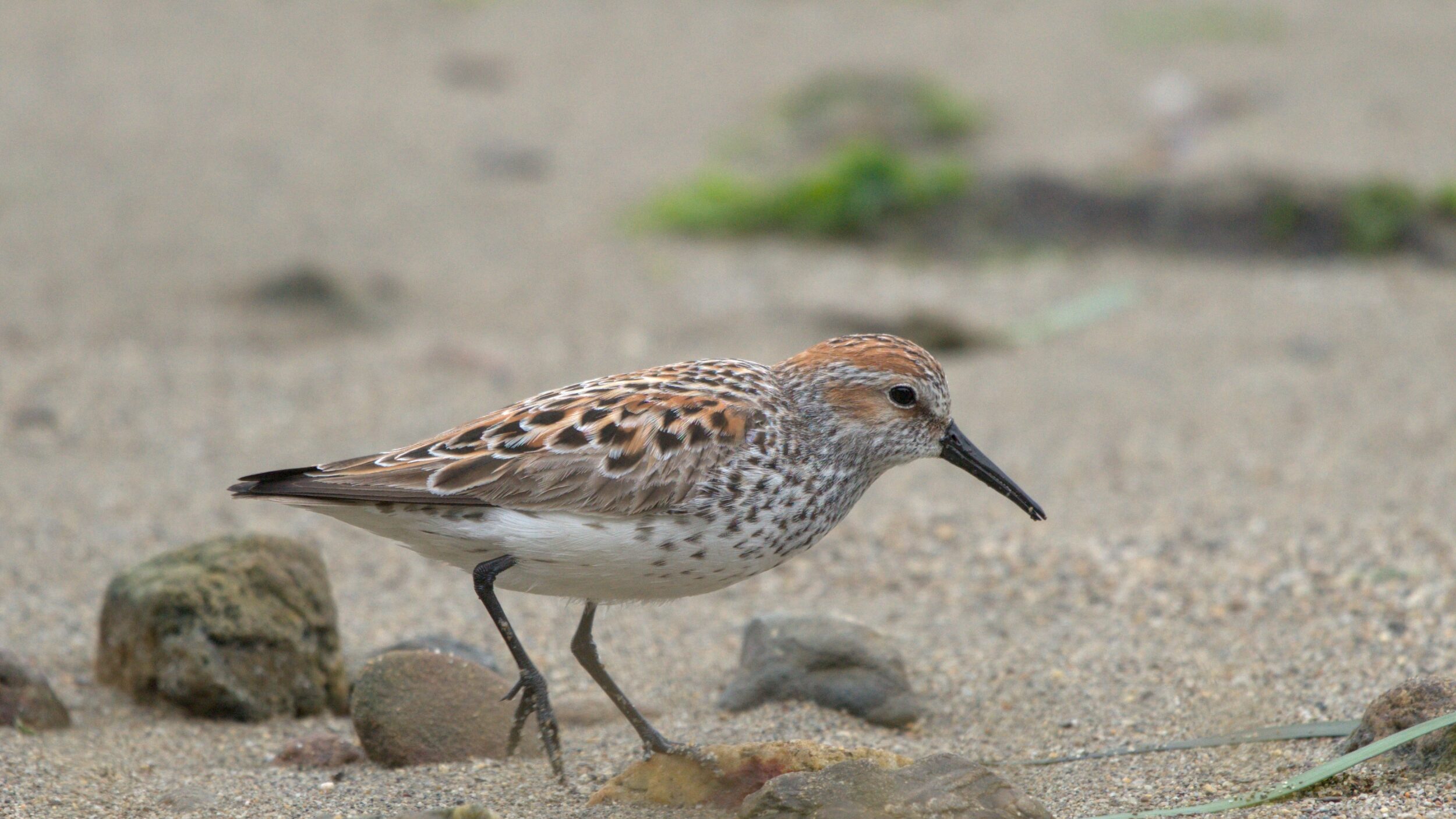
Western sandpiper. Photo: David Lumpkin
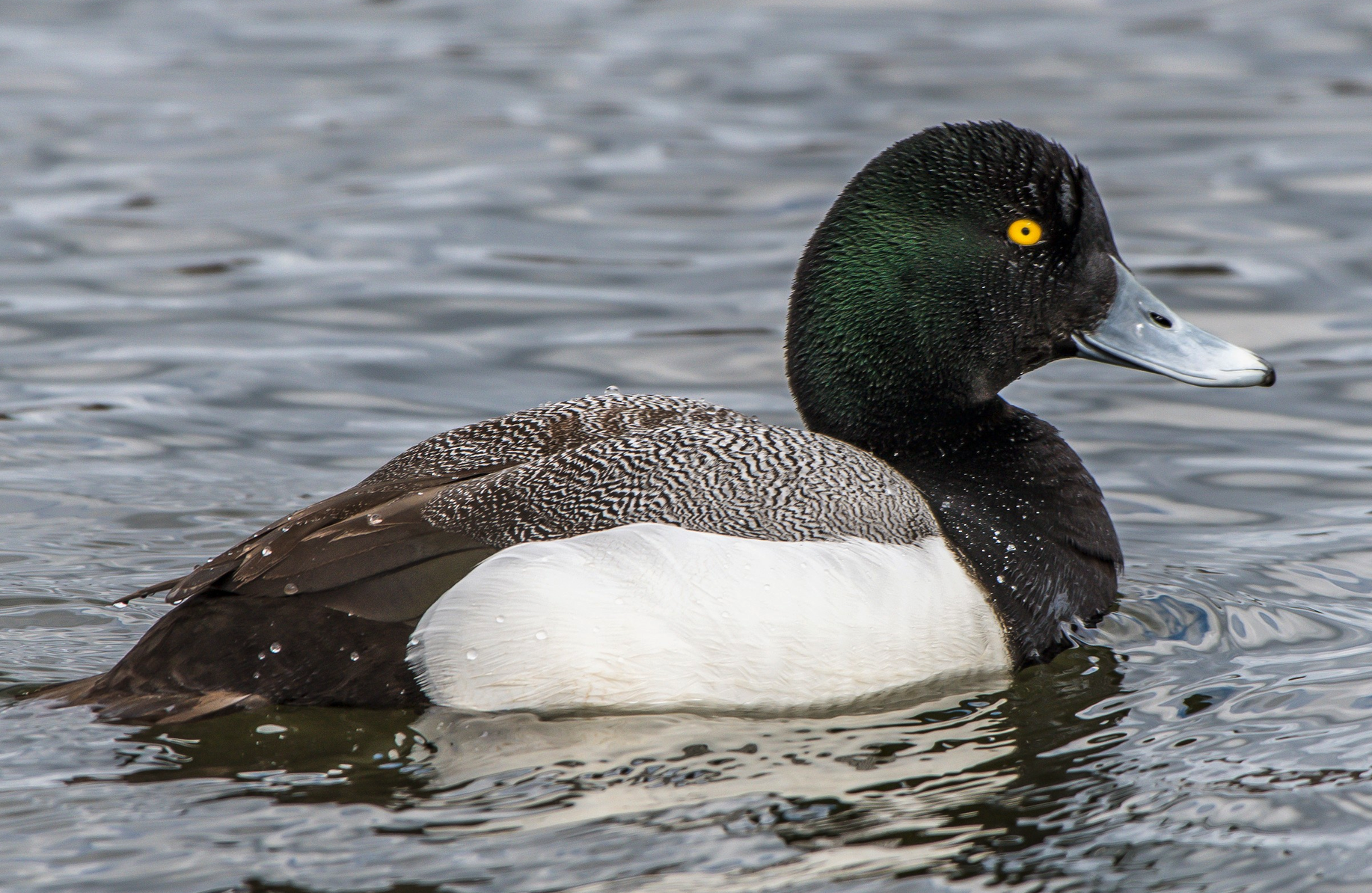
But some species have increased or had stable populations. Scaup and Least Sandpiper are both numerous species that have not only remained numerous but increased over the years. Double-crested and Brandt’s Cormorants had both increased from relatively low abundance during the 1990s to numbering in the thousands today.
Greater Scaup. Photo: Frank King/Macaulay Library
Community changes
The result of these different trends for different species is not just fewer overall birds, but a shift in the composition of the overall bird community on the bay.
With the decline of Western Sandpipers, Least Sandpipers now make up a much larger proportion of the total number of shorebirds. For waterbirds, we’ve seen a shift from similar proportions of Scaup, Surf Scoters, and Bufflehead to a community dominated by Scaup. We also see that fish-eating cormorants (Double-crested and Brant’s) now make up a larger proportion of the waterbird community.
It is still unclear what impact these shifts in community composition will have on the ecology of the bay. But each of these species fills a slightly different ecological niche, feeding on slightly different prey in slightly different ways, so these changes in bird community composition are likely happening along with and perhaps causing changes in the Tomales Bay food web.
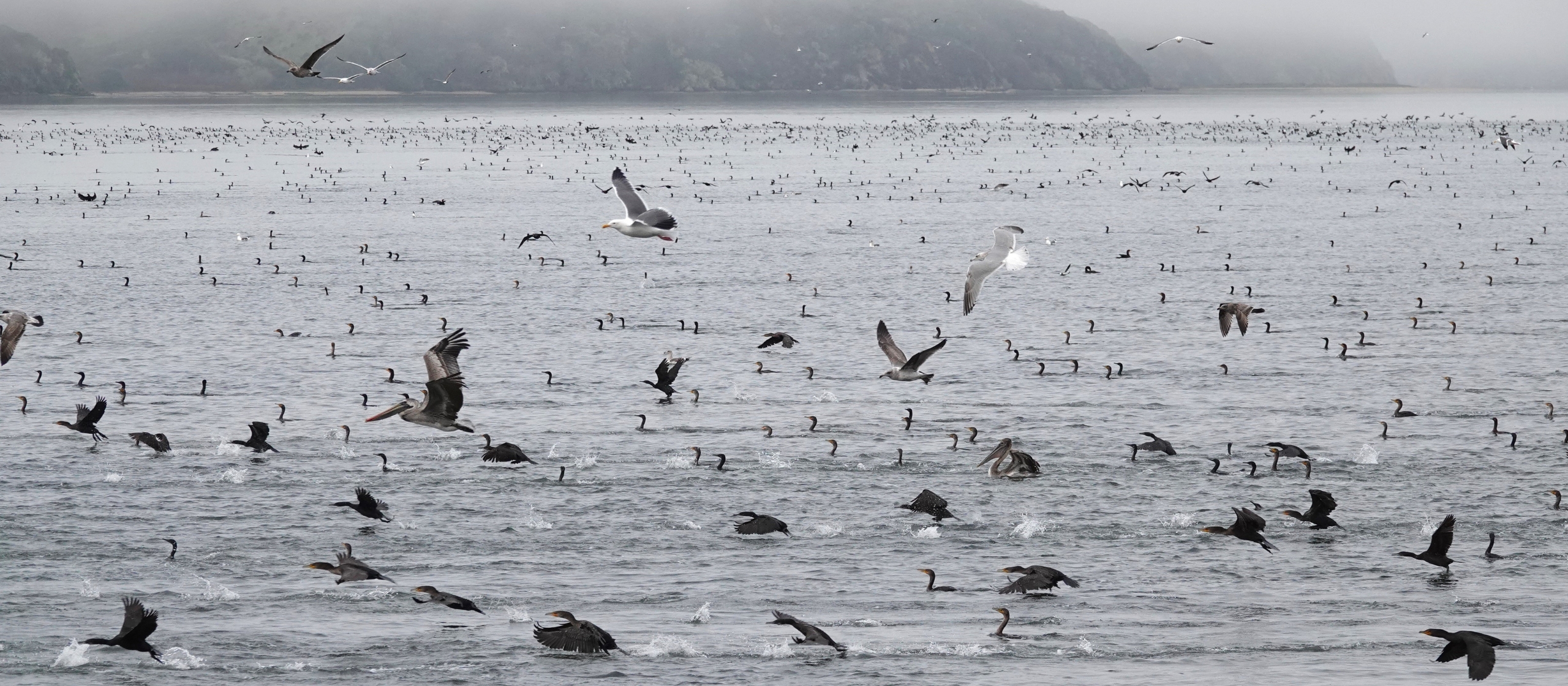
Thousands of Double-crested and Brandt’s Cormorants, and other waterbird species, feeding on a Tomales Bay herring spawning event. Photo: Nils Warnock
Searching for reasons
The bird declines we’re seeing are likely due to habitat loss and degradation on their breeding grounds, during migration, and at their wintering sites like Tomales Bay. Further complicating our understanding of the reasons is that each species may be impacted by different things. The surest way to link environmental characteristics to population changes is to collect data on reproduction and survival along these routes, which is difficult to do. We’re studying Dunlin winter movements and migration to learn more about population impacts throughout their migratory path.
Despite this challenge, we know that local factors do matter for local populations, and we’ve seen on Tomales Bay that restoring habitat and supporting important food sources can help migratory birds. Shorebird numbers responded positively following environmental restoration work on the Giacomini Wetlands in 2008. Our study also shows that there are more birds on the bay when there are more herring spawning, when there is more upwelling in the ocean just outside the bay, and when there is less rainfall.
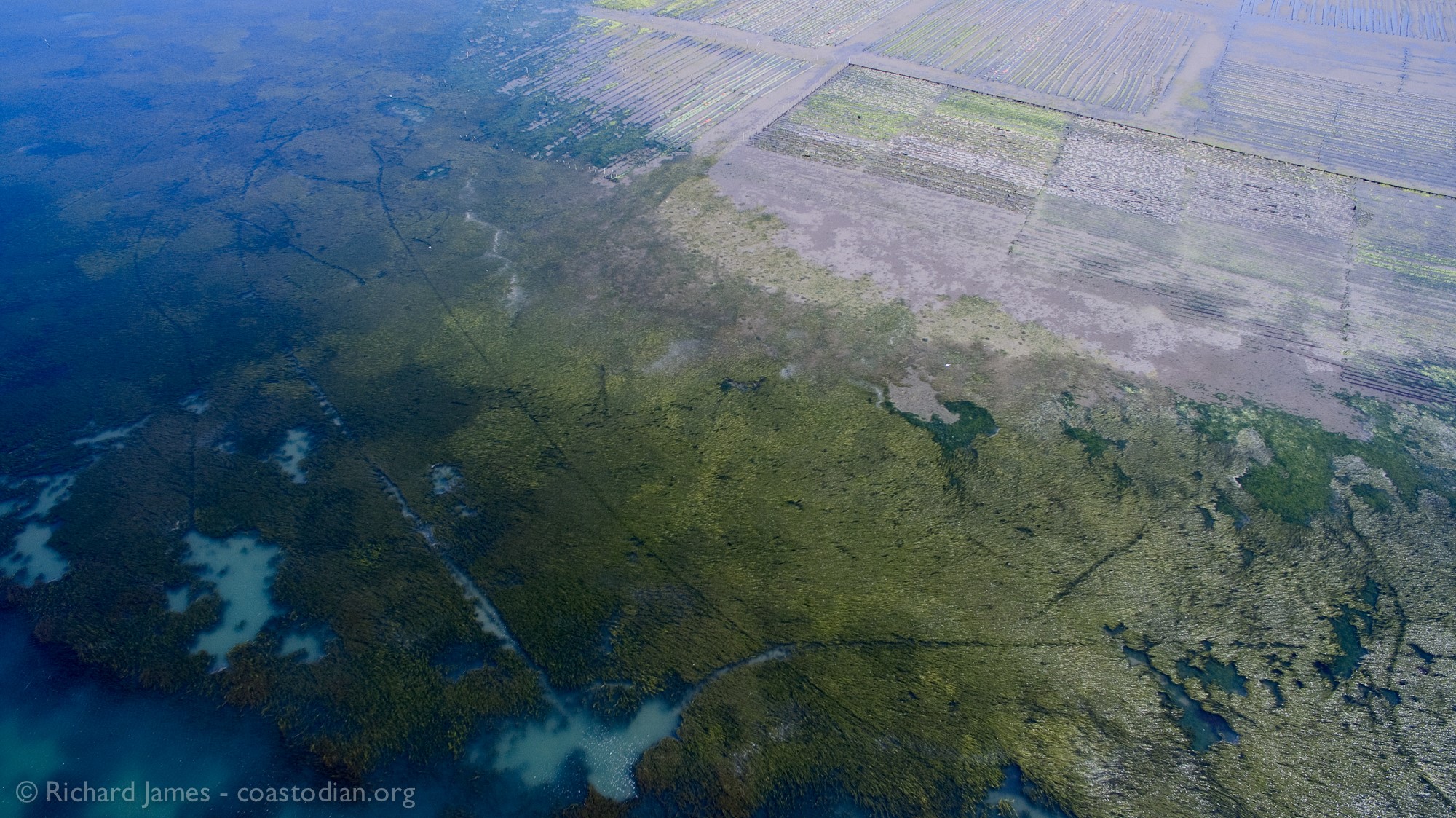
Shellfish aquaculture amidst natural tidal wetlands, Tomales Bay. Photo: Richard James
Human use of the bay can also impact bird abundances, both positively and negatively. Dunlin and Western Sandpiper avoid shellfish aquaculture areas, whereas Willets appear attracted to these areas. The Great Egrets we studied selected natural wetlands over shellfish aquaculture areas during most tides.
Recreational boating on Tomales Bay has also increased in recent years and a growing body of scientific literature shows that more recreation often means an impact on wildlife.
Successful conservation considers the relationship between people and place. We believe it is important to research these impacts so that we can shape policies to protect both habitat and human values. We’ll continue counting waterbirds and shorebirds on Tomales Bay, collecting data to guide the careful stewardship of this important bay.
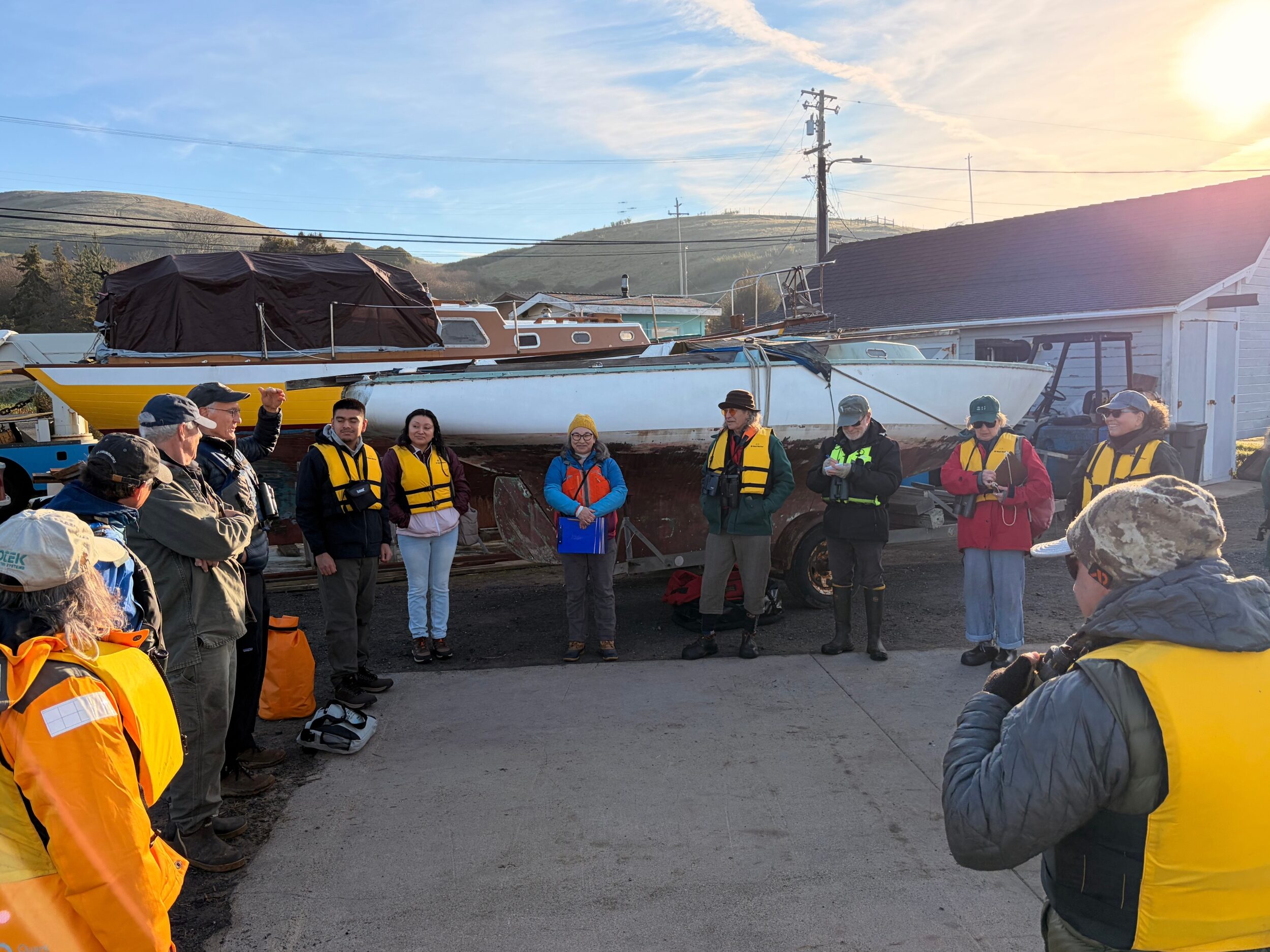
Volunteers gather with staff on an early morning before boarding boats for the annual winter waterbird count on Tomales Bay in 2025. Photo: Jim Jensen.
How you can help
Although bird declines are complex continent-wide processes, there are concrete and simple local steps you can take to help birds.
Support monitoring projects like these: Conservation science at All Hands Ecology depends on donations and grants from generous individuals, foundations, public agencies, and local community groups. Become a member or donate today.
Skilled bird identifiers can also volunteer on our monitoring projects
Responsible recreation: Every time a bird is forced to take flight to escape a real or perceived predator, that is another unexpected expense in their already-strained calory budget. You can help when recreating on the bay by keeping at least 300 feet away from birds. If there is no other option than to travel closer, decrease your speed and change your direction of travel to not head right at birds.
Support local habitat restoration and conservation: Our monitoring data shows a clear benefit to birds of restoring good quality habitat. Protecting the good quality habitat we still have is also crucial. Stay engaged with local issues around Tomales Bay and support actions that protect, enhance, or restore bird habitat.
Purchase duck stamps: Funds generated by the California Duck Stamp and U.S. Migratory Bird Hunting and Conservation Stamp directly support projects to improve habitat for a range of bird species.